
- Advertisement -
Saturday, August 1, 2026
Fact

UK Royal Society of Biology Photography Competition 2021

UK Royal Society of Biology Photography Competition 2021
889views

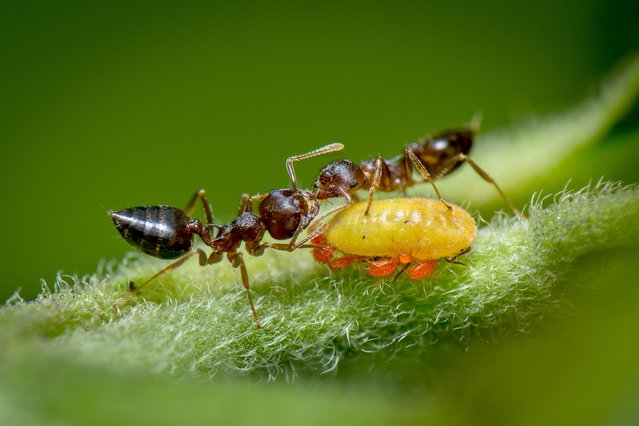
Winner; Mutualism. Thane, India. The mutualistic relationship between ant and aphid. The ants consume honeydew excreted by a yellow aphid, and in return the ants protect the aphid from other organisms such as red mites. (Photo by Vishwanath Birje/Royal Society of Biology Photography Competition)
Winner; Mutualism. Thane, India. The mutualistic relationship between ant and aphid. The ants consume honeydew excreted by a yellow aphid, and in return the ants protect the aphid from other organisms such as red mites. (Photo by Vishwanath Birje/Royal Society of Biology Photography Competition)

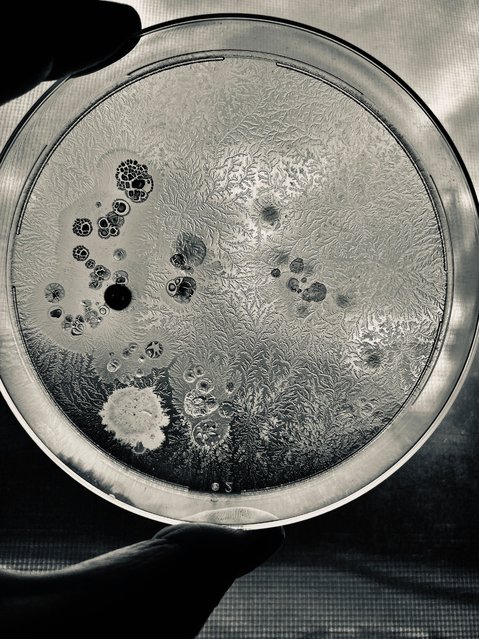
Runner-up; Fractals. UK. The patterns in this image are of Bacillus subtilis being grown on a dextrose agar plate. The patterns form depending on the conditions of the bacteria’s environment and how bacterial cells move after coming into contact with each other. (Photo by Alice Feng/Royal Society of Biology Photography Competition)
Runner-up; Fractals. UK. The patterns in this image are of Bacillus subtilis being grown on a dextrose agar plate. The patterns form depending on the conditions of the bacteria’s environment and how bacterial cells move after coming into contact with each other. (Photo by Alice Feng/Royal Society of Biology Photography Competition)

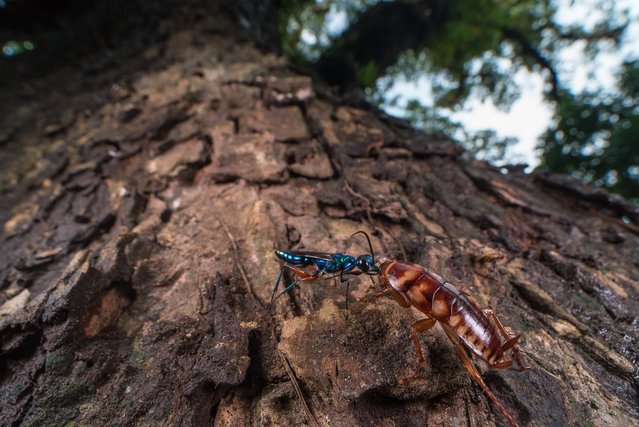
Shortlisted; The hunt. West Bengal, India. The interaction between the jewel wasp and cockroach is anything but friendly. The jewel wasp injects venom into the cockroach’s brain, paralysing the latter. The wasp then lays an egg in the zombified cockroach. (Photo by Ripan Biswas/Royal Society of Biology Photography Competition)
Shortlisted; The hunt. West Bengal, India. The interaction between the jewel wasp and cockroach is anything but friendly. The jewel wasp injects venom into the cockroach’s brain, paralysing the latter. The wasp then lays an egg in the zombified cockroach. (Photo by Ripan Biswas/Royal Society of Biology Photography Competition)

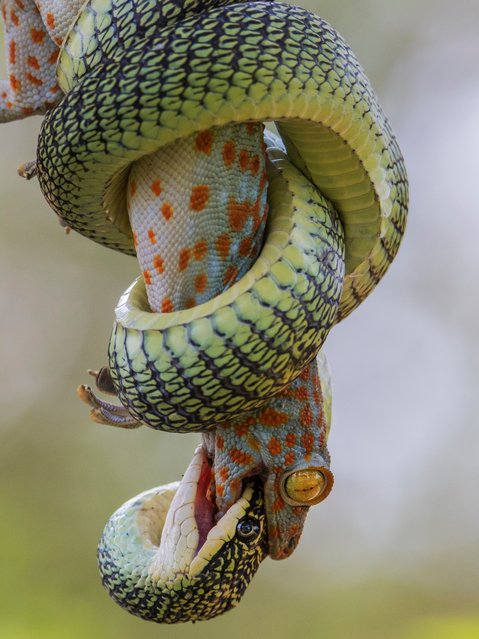
Shortlisted; Bite for survival. Bangkok, Thailand. The tokay gecko bites back despite being held in the coils of the golden tree snake. (Photo by Wei Fu/Royal Society of Biology Photography Competition)
Shortlisted; Bite for survival. Bangkok, Thailand. The tokay gecko bites back despite being held in the coils of the golden tree snake. (Photo by Wei Fu/Royal Society of Biology Photography Competition)

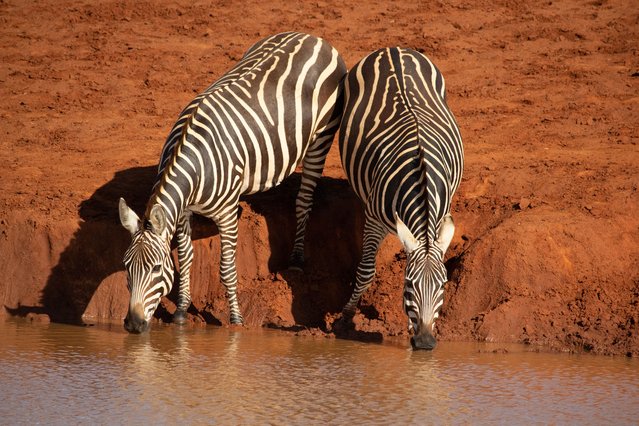
Highly commended; Watering hole antics. Kenya. A pair of Grevy’s zebra drink from a watering hole. (Photo by Hayden Wood/Royal Society of Biology Photography Competition)
Highly commended; Watering hole antics. Kenya. A pair of Grevy’s zebra drink from a watering hole. (Photo by Hayden Wood/Royal Society of Biology Photography Competition)

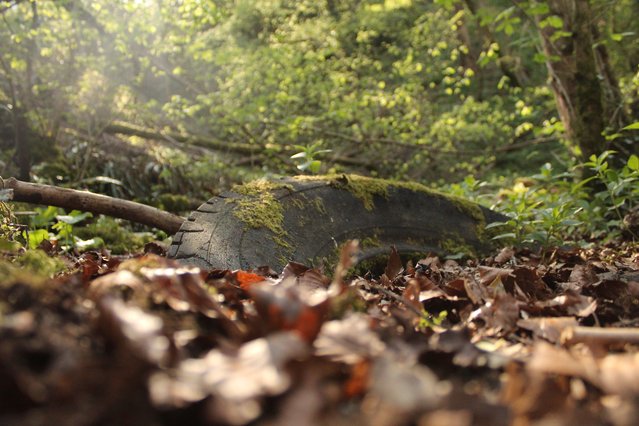
Winner; Submerged. Somerset, UK. A tyre being reclaimed by nature in the Vallis Forest, Somerset, showing the connection between people and the natural world. (Photo by Roan Jones/Royal Society of Biology Photography Competition)

Winner; Submerged. Somerset, UK. A tyre being reclaimed by nature in the Vallis Forest, Somerset, showing the connection between people and the natural world. (Photo by Roan Jones/Royal Society of Biology Photography Competition)

Shortlisted; Solar power plant. Zhejiang province, China. A large group of night herons perch on solar power panels at dusk. (Photo by Gu Guanghui/Royal Society of Biology Photography Competition)
Shortlisted; Solar power plant. Zhejiang province, China. A large group of night herons perch on solar power panels at dusk. (Photo by Gu Guanghui/Royal Society of Biology Photography Competition)

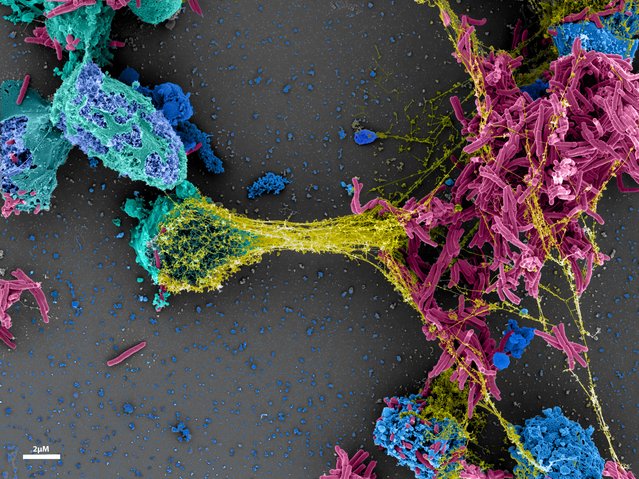
Shortlisted; Spiderman of our body. Missouri, USA. Immune cells communicate with each other to protect our body from invading foreign particles or micro-organisms. Here, neutrophil cells (light blue) release web-like structures (yellow) to defend against tuberculosis bacteria (pink). (Photo by Chanchal Sur Chowdhury/Royal Society of Biology Photography Competition)
Shortlisted; Spiderman of our body. Missouri, USA. Immune cells communicate with each other to protect our body from invading foreign particles or micro-organisms. Here, neutrophil cells (light blue) release web-like structures (yellow) to defend against tuberculosis bacteria (pink). (Photo by Chanchal Sur Chowdhury/Royal Society of Biology Photography Competition)

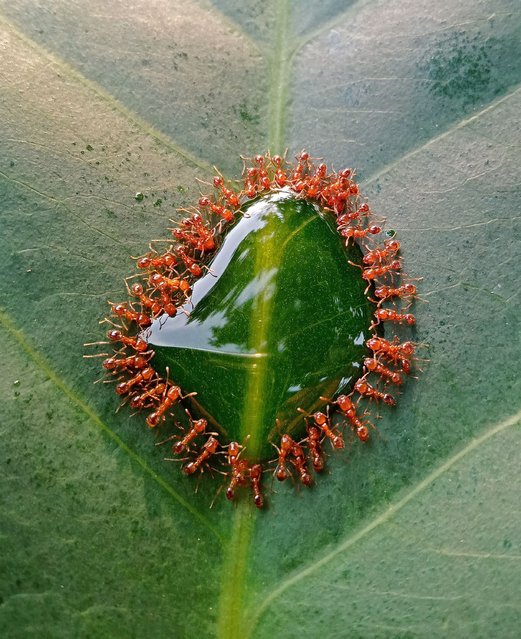
Shortlisted; A tiny gathering. Pampanga, Philippines. A small group of thief ants are gathered to enjoy a few drops of syrup on top of a wax apple leaf. (Photo by John Ishide Bulanadi/Royal Society of Biology Photography Competition)
Shortlisted; A tiny gathering. Pampanga, Philippines. A small group of thief ants are gathered to enjoy a few drops of syrup on top of a wax apple leaf. (Photo by John Ishide Bulanadi/Royal Society of Biology Photography Competition)

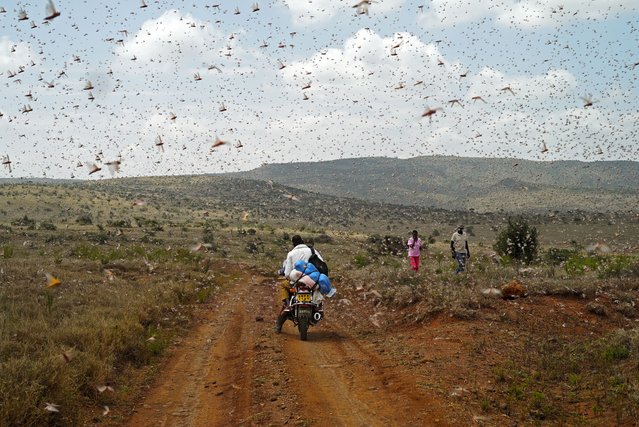
Shortlisted; The plague. Borana, Kenya. In 2019, Kenya and most of east Africa saw its worst locust outbreak in 70 years. Varying weather due to climate change and travel and shipping restrictions have meant the outbreaks are getting larger and harder to control. (Photo by Henry Harte/Royal Society of Biology Photography Competition)
Shortlisted; The plague. Borana, Kenya. In 2019, Kenya and most of east Africa saw its worst locust outbreak in 70 years. Varying weather due to climate change and travel and shipping restrictions have meant the outbreaks are getting larger and harder to control. (Photo by Henry Harte/Royal Society of Biology Photography Competition)

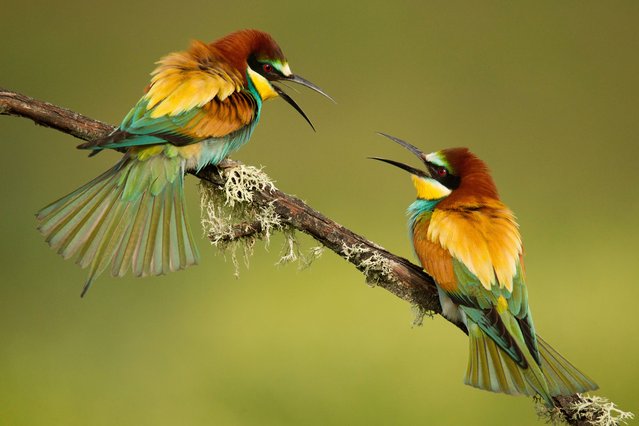
Shortlisted; Family quarrel. Córdoba, Spain. Bee-eaters are easily spotted birds because of their colours. They spend most of their time flying in search of insects. (Photo by Alfonso Roldán Losada/Royal Society of Biology Photography Competition)
Shortlisted; Family quarrel. Córdoba, Spain. Bee-eaters are easily spotted birds because of their colours. They spend most of their time flying in search of insects. (Photo by Alfonso Roldán Losada/Royal Society of Biology Photography Competition)

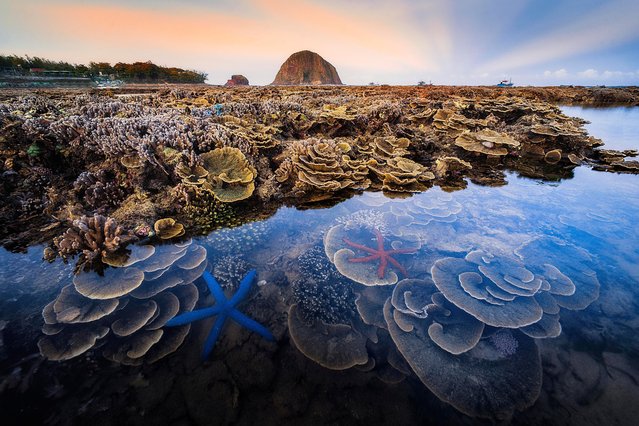
Runner-up; Hon Yen marine ecosystem. Phu Yen, Vietnam. Every year between May and August, the coral of this rich and diverse ecosystem becomes exposed at low tide. (Photo by Truong Hoai Vu/Royal Society of Biology Photography Competition)

Runner-up; Hon Yen marine ecosystem. Phu Yen, Vietnam. Every year between May and August, the coral of this rich and diverse ecosystem becomes exposed at low tide. (Photo by Truong Hoai Vu/Royal Society of Biology Photography Competition)

Julia Everson
Julia is a freelance writer and lifelong learner with an ongoing curiosity to study new things. She enjoys checking out the latest grammar books and writing about video games more than anything else. If she's not running through Colorado’s breathtaking landscape, she's indoors hidden away in her cozy game room trolling noobs and leveling up an RPG character. She is a Final Fantasy IX apologist (although she loves them all… except XV), coffee aficionado, and a bit of a health nut. Julia graduated from Western Kentucky University with a B.A. in English Literature with a minor in Creative Writing.