
- Advertisement -
Saturday, August 1, 2026
Fact

Photos of Insects

113views

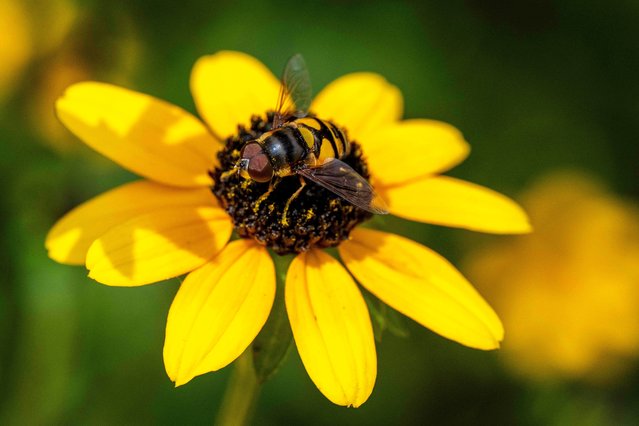
A batman hoverfly rests on a black-eyed susan at Quiet Waters Park in Annapolis, MD, on September 15, 2025. (Photo by Jim Watson/AFP Photo)

A Batman hoverfly rests on a Black-eyed Susan at Quiet Waters Park in Annapolis, Md., on Sept. 15, 2025.(Photo by Jim Watson/AFP Photo)
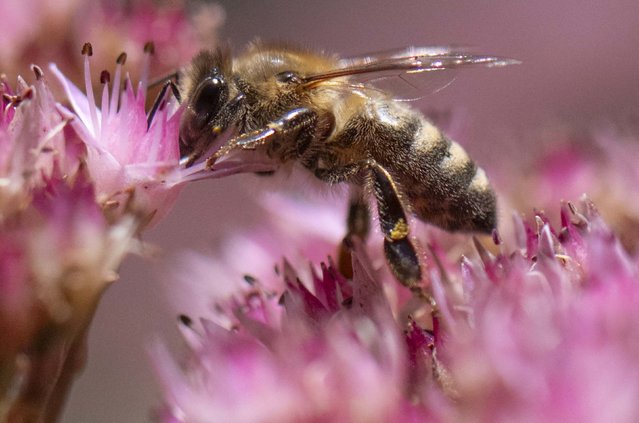
A bee searches for nectar on a flower in Frankfurt am Main, Germany, on Friday, September 19, 2025. (Photo by Boris Roessler/dpa/picture alliance/Getty Images)

A bee collects nectar from a flower in Frankfurt am Main, Germany, on Sept. 19, 2025.(Photo by Boris Roessler/dpa/picture alliance/Getty Images)
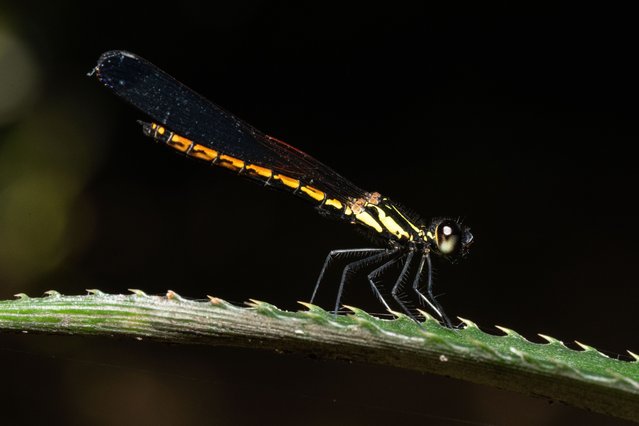
A damselfly (Libellago lineata) in a garden in Colombo, Sri Lanka in the second decade of October 2025. (Photo by Thilina Kaluthotage/NurPhoto/Rex Features/Shutterstock)

A Libellago lineata damselfly in a garden in Colombo, Sri Lanka, in mid-October 2025.(Photo by Thilina Kaluthotage/NurPhoto/Rex Features/Shutterstock)
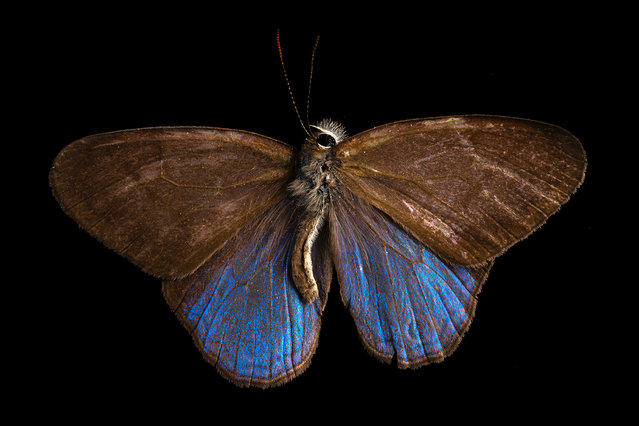
A butterfly known as the blue-topped satyr in October 2025. It was found in a Brazilian eucalyptus plantation, where scientists observed butterflies were less colourful than in native forests. The insects’ brilliant hues evolved in lush ecosystems to help them survive; now they are becoming more muted to adapt to degraded landscapes. (Photo by Roberto García-Roa)

A Blue-topped Satyr butterfly in a Brazilian eucalyptus plantation in October 2025. Scientists found that butterflies in these plantations are less colorful than those in native forests, a muted adaptation to degraded landscapes.(Photo by Roberto García-Roa)
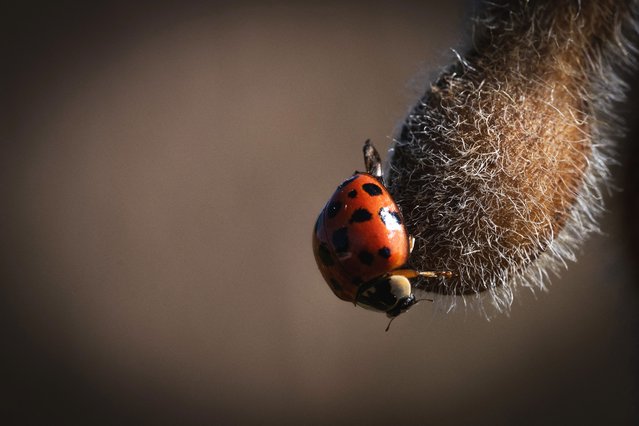
A lady bug battle crawls upon a soybean pods that has turned brown as harvest for the crop nears in Centreville, MD, on September 23, 2025. (Photo by Jim Watson/AFP Photo)

A ladybug crawls on a browning soybean pod as harvest nears in Centreville, Md., on Sept. 23, 2025.(Photo by Jim Watson/AFP Photo)
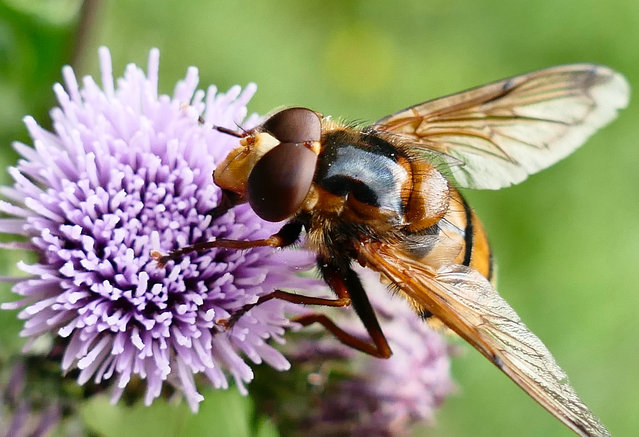
A hoverfly on a thistle flower in Dunsden, Oxfordshire, UK on September 18, 2025. (Photo by Geoffrey Swaine/Rex Features/Shutterstock)

A hoverfly on a thistle flower in Dunsden, Oxfordshire, UK, on Sept. 18, 2025.(Photo by Geoffrey Swaine/Rex Features/Shutterstock)
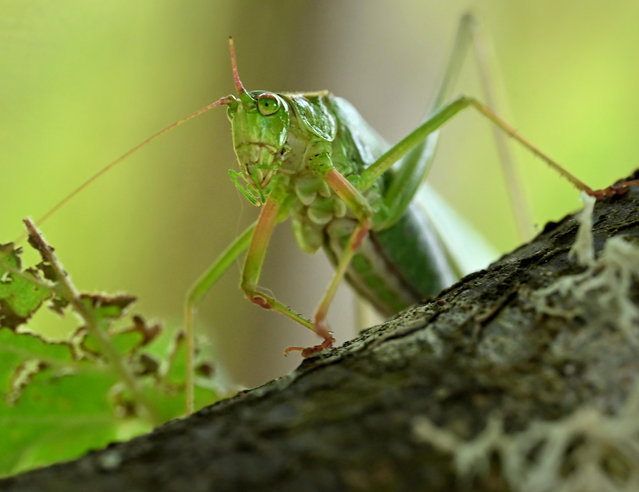
A katydid with only one antenna climbs on a hazelnut tree in an orchard near Elkton in southwestern Oregon on September 28, 2025. Katydids are close relatives of grasshoppers and crickets, and many species feed on leaves, flowers and fruit. (Photo by Robin Loznak/ZUMA Press Wire/Rex Features/Shutterstock)

A one-antennated katydid climbs a hazelnut tree in an orchard near Elkton in southwestern Oregon on Sept. 28, 2025. These close relatives of grasshoppers and crickets often feed on leaves, flowers, and fruit.(Photo by Robin Loznak/ZUMA Press Wire/Rex Features/Shutterstock)
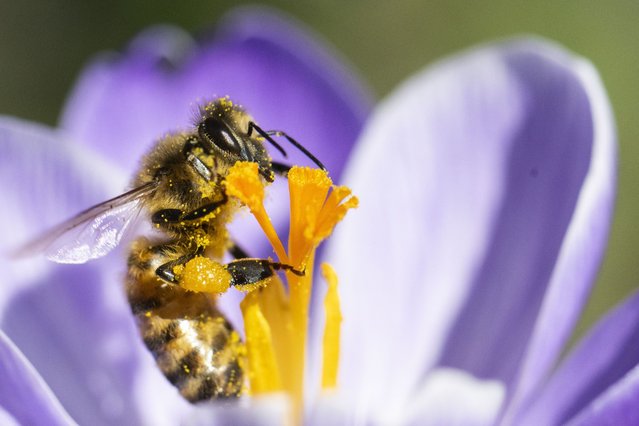
A bee lands on a crocus blossom in Zurich, Switzerland, 04 March 2025. (Photo by Ennio Leanza/EPA/EFE)

A bee lands on a crocus blossom in Zurich, Switzerland, on March 4, 2025.(Photo by Ennio Leanza/EPA/EFE)
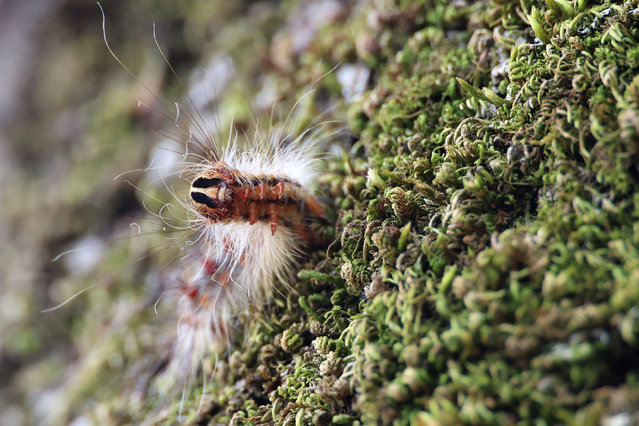
This photograph taken on June 11, 2025, shows forest of oak trees devastated by Bombyx Disparate caterpillar (Lymantria Dispar caterpillar) in the Taravo valley on the French Mediterranean island of Corsica. The prefecture of Haute-Corse (upper Corsica) has issued a communique alerting to a spike in Bombyx disparate Lymantria caterpillar population which devour the foliage on the oak tree forests of central Corsica - although affected oak trees can often recover from the damage, allbeit with stunted growth. (Photo by Pascal Pochard-Casabianca/AFP Photo)

Oak trees devastated by Lymantria dispar (gypsy moth) caterpillars in the Taravo valley on the French island of Corsica, on June 11, 2025. Authorities have warned of a population spike, which defoliates the forests; while oaks can recover, their growth is often stunted.(Photo by Pascal Pochard-Casabianca/AFP Photo)
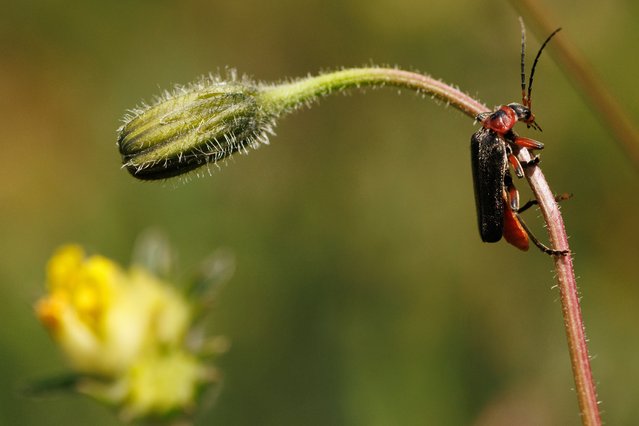
A Red Soldier beetle climbs the stem of a wild flower on Hutchinson's Bank on June 02, 2025 in New Addington, United Kingdom. Hutchinson's Bank, which is managed by the London Wildlife Trust (LWT), is a large area of secluded chalk grassland and woodland, and one of the best spots in the whole of the United Kingdom to see butterflies. Around 42 of the UK's 59 species have been recorded here. Data recorded by the UK Butterfly Monitoring Scheme (UKBMS) in 2024 paints a bleak picture for UK butterflies, with 51 of 58 species monitored showing a decline in numbers compared to 2023, making it the the 5th worst year on record, and over a third of the species showing a significant long-term decline. Conservationists have warned that butterflies are particularly vulnerable to environmental factors such as climate change and the use of pesticides, making them an important indicator for the state of biodiversity in the UK. (Photo by Dan Kitwood/Getty Images)

A Red Soldier beetle climbs the stem of a wildflower on Hutchinson’s Bank in New Addington, United Kingdom, on June 2, 2025. This nature reserve is a prime butterfly habitat, yet recent data shows significant declines in UK butterfly populations, highlighting concerns over biodiversity loss.(Photo by Dan Kitwood/Getty Images)
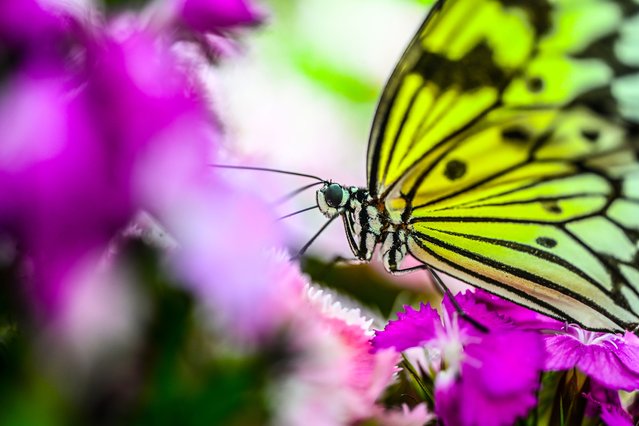
A view of the butterfly at Tropical Butterfly Garden in Konya, Turkiye on April 23, 2025. Butterflies brought from countries such as Costa Rica, Kenya, the Philippines, Malaysia, Singapore, Singapore, Indonesia, Colombia and Panama in pupa stage in special boxes could be watched in their natural environment with all the metamorphosis stages they go through in the process of becoming a butterfly in the garden. In the Turkiye's first butterfly garden, which is kept under equatorial climatic conditions of 28 degrees Celsius and 80 percent humidity in summer and winter, 20 thousand butterflies of 60 different species can be observed monthly. Also there are many tropical plants and insects as well as butterflies, offers a visual feast to millions of local and foreign tourists every year. (Photo by Cem Genco/Anadolu via Getty Images)

A butterfly at the Tropical Butterfly Garden in Konya, Turkiye, on April 23, 2025. The garden, maintained under equatorial conditions, hosts thousands of butterflies from around the world, allowing visitors to observe their entire metamorphosis.(Photo by Cem Genco/Anadolu via Getty Images)
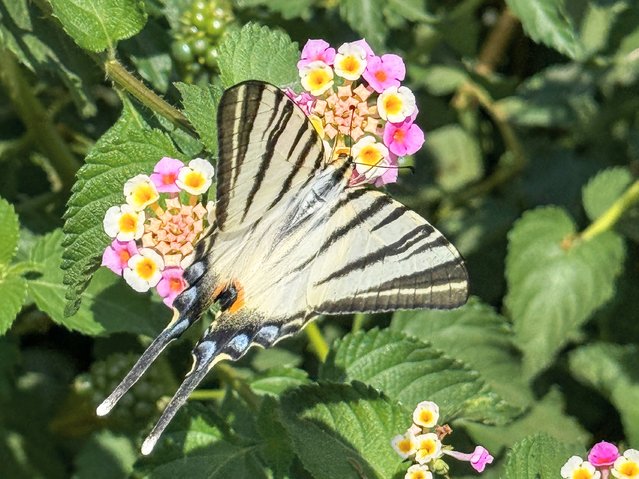
A Swallowtail butterfly on a Lantana plant on Paxos a Greek island off the coast off Corfu. 28 July 2025. (Photo by Jack Hill/The Sunday Times)

A Swallowtail butterfly on a Lantana plant on the Greek island of Paxos, near Corfu, on July 28, 2025.(Photo by Jack Hill/The Sunday Times)
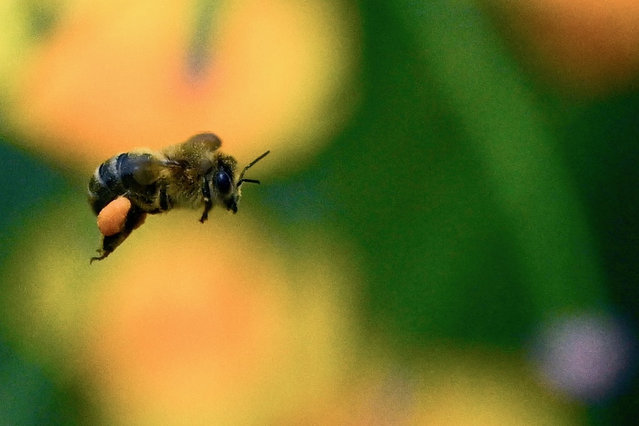
A worker bee in a rush collets pollen from the Yellow Dwarf California Poppy flower, which is grown as an ornamental plant in high altitude areas in Kaynasli district of Duzce, Turkiye on June 13, 2025. (Photo by Omer Urer/Anadolu via Getty Images)

A worker bee collects pollen from a Yellow Dwarf California Poppy in the Kaynasli district of Duzce, Turkiye, on June 13, 2025.(Photo by Omer Urer/Anadolu via Getty Images)
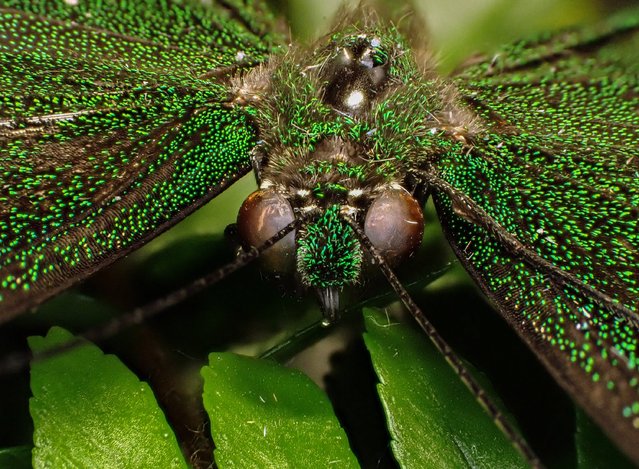
A closeup view of a butterfly's face is seen through macro lens in Tropical Butterfly Garden in Konya, Turkiye on July 09, 2025. (Photo by Serhat Cetinkaya/Anadolu via Getty Images)

A close-up view of a butterfly’s face, photographed with a macro lens at the Tropical Butterfly Garden in Konya, Turkiye, on July 9, 2025.(Photo by Serhat Cetinkaya/Anadolu via Getty Images)
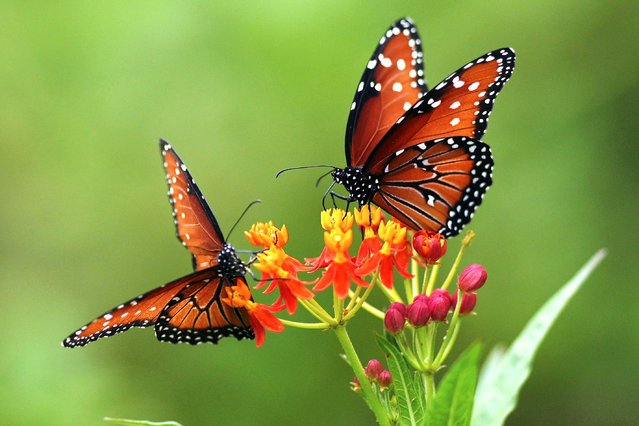

Butterflies gather around flowers along the Riverwalk, Friday, July 18, 2025, in San Antonio. (Phoot by Eric Gay/AP Photo)

Butterflies gather on flowers along the San Antonio Riverwalk on July 18, 2025.(Phoot by Eric Gay/AP Photo)

Raymond Hinze
Raymond Hinze is a writer and IT consultant with nearly 20 years of experience across the private and public sectors. He's worked as a writer, trainer, technical support person, delivery manager, system admin, and various other roles that involve getting people and technology to work together.