

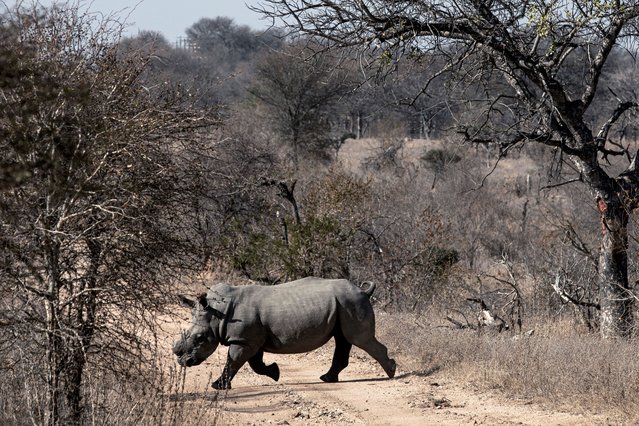
A white rhino crosses a dirt road in South Africa’s Olifants West Nature Reserve as members of the all-female Black Mambas Anti-Poaching Unit patrol on August 1, 2025. Dehorning rhinos has reduced poaching by approximately 80%; the procedure is typically done every 18-24 months. Founded in 2013, the unarmed unit of 36 women conducts foot and vehicle patrols, removes snares, and educates local communities, significantly raising awareness and reducing poaching incidents.(Photo by Per-Anders Pettersson/Getty Images)
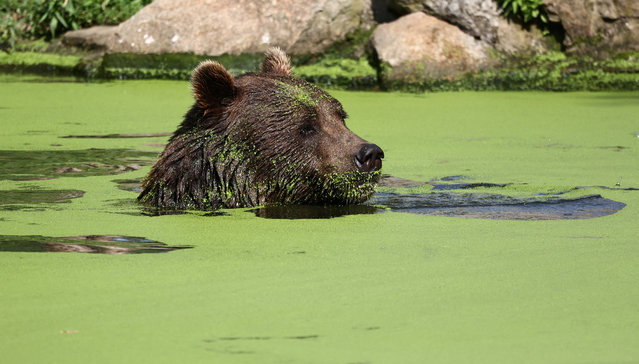
A bear cools off in a pond during a heatwave at the zoo in Berlin, Germany, on August 14, 2025.(Photo by Liesa Johannssen/Reuters)
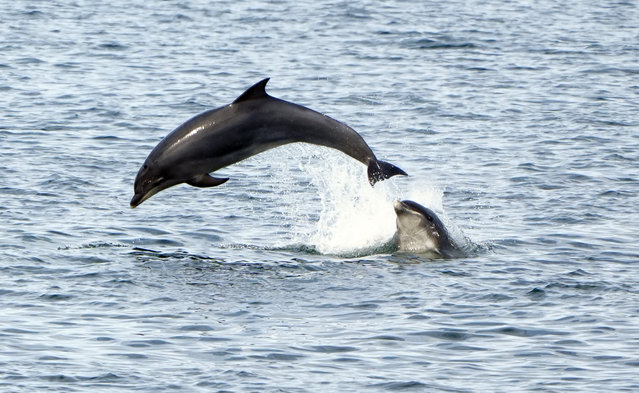
Dolphins swim in the North Sea near Whitley Bay, UK, on August 11, 2025, as temperatures were forecast to soar above 30°C, potentially creating another heatwave.(Photo by Owen Humphreys/PA Images via Getty Images)
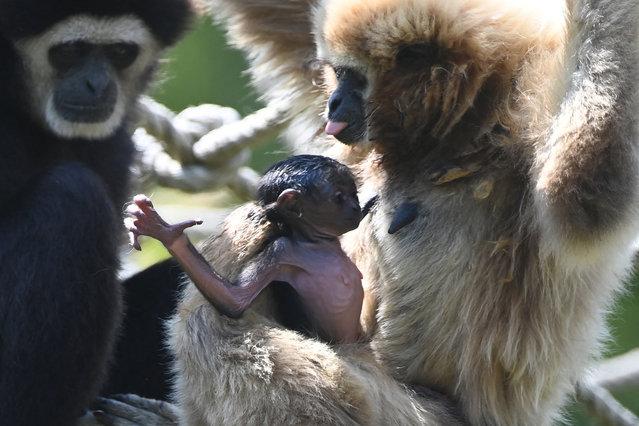
A three-week-old Lar gibbon, also known as a white-handed gibbon, is held by its mother at the Spaycific’Zoo in France on August 15, 2025. The birth is a significant milestone for this endangered species, which is threatened primarily by deforestation in Southeast Asia. The sex and name of the infant will be announced soon.(Photo by Jean-François Monier/AFP Photo)
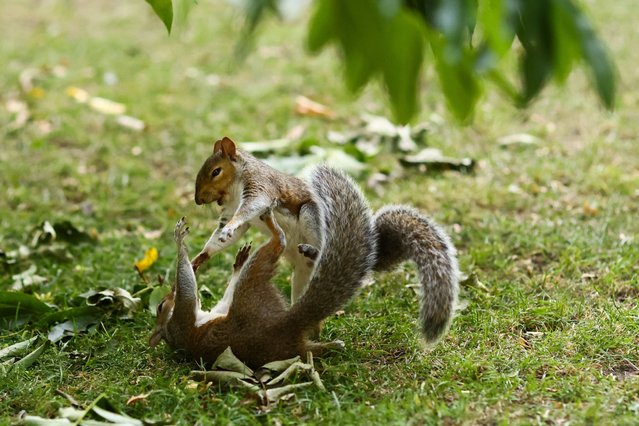
Two squirrels play in St. James’s Park during a heatwave in London, Britain, on August 12, 2025.(Photo by Jack Taylor/Reuters)
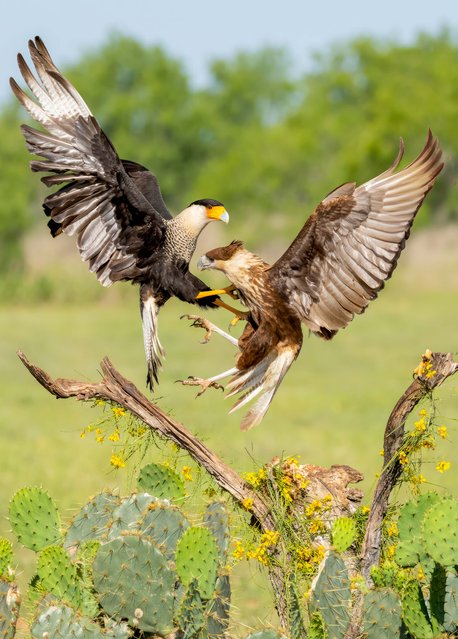
A crested caracara battles a juvenile for a roosting spot in Texas’s Rio Grande Valley in mid-August 2025. Although classified as a falcon, this bird often scavenges like a vulture instead of hunting live prey.(Photo by Wayne Williams/Solent News & Photo Agency)
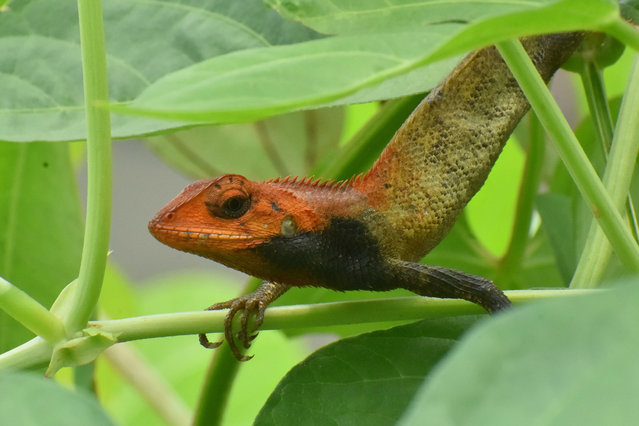
An oriental garden lizard rests in a garden in Assam, India, on August 6, 2025.(Photo by Anuwar Hazarika/NurPhoto/Rex Features/Shutterstock)
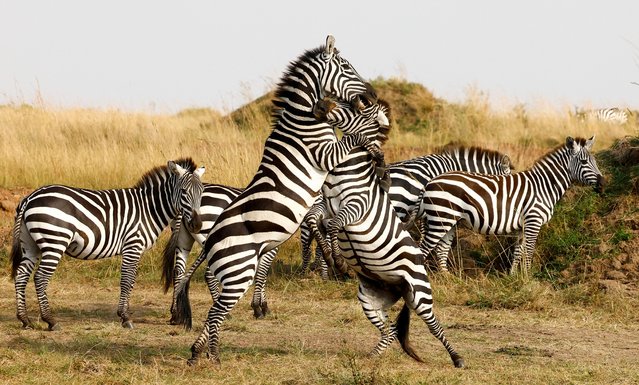
Zebras tussle while grazing in the Maasai Mara National Reserve, Kenya, on August 7, 2025.(Photo by Thomas Mukoya/Reuters)
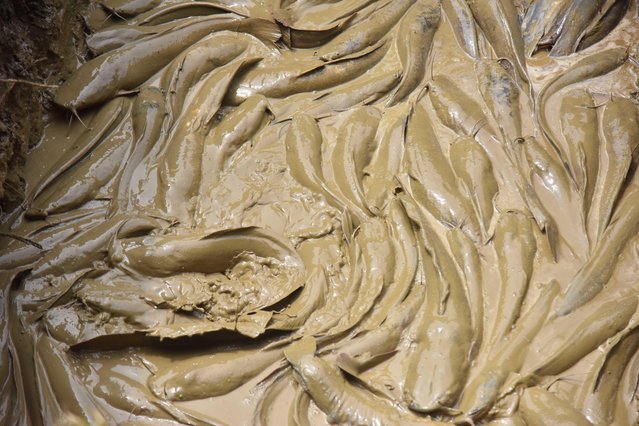
Banned African catfish are buried after police seized them in Assam, India, on August 7, 2025. The cultivation of this species was banned in 2000 as it poses a threat to local ecosystems.(Photo by Anuwar Hazarika/NurPhoto/Rex Features/Shutterstock)
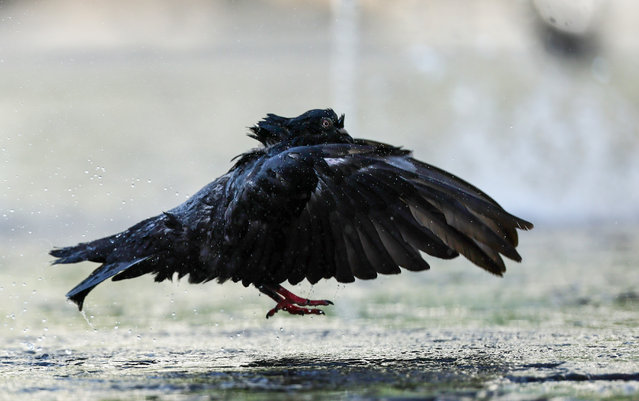
A dove bathes in a public fountain in Frankfurt, Germany, on August 13, 2025.(Photo by Ronald Wittek/EPA)
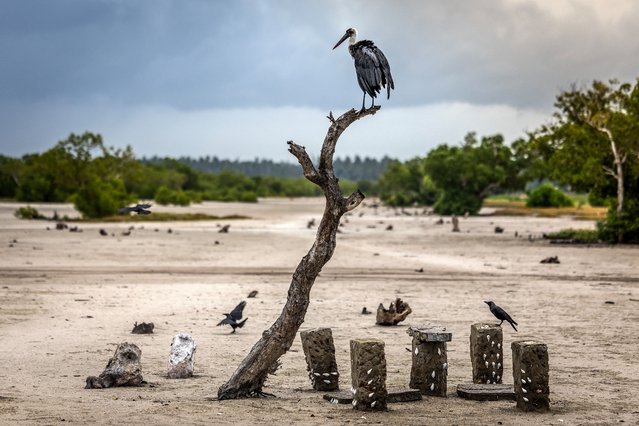
A migratory bird perches on a dead tree in a deforested area of Mida Creek, Kenya, on August 4, 2025. In the background, local communities—supported by nonprofits—are successfully restoring millions of mangroves. This effort revives fisheries, protects coastlines, and boosts biodiversity through a biodiversity credit program.(Photo by Luis Tato/AFP Photo)
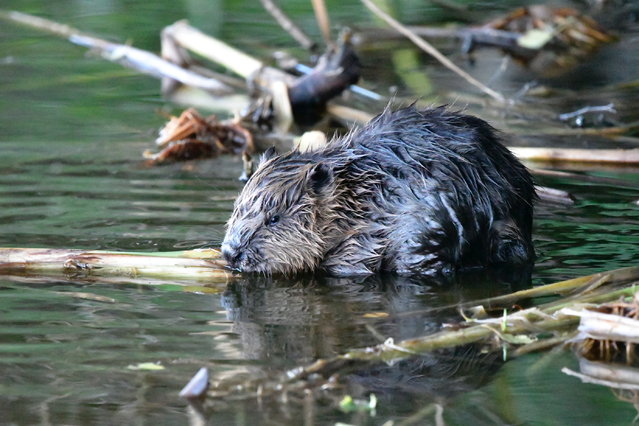
A young beaver, or kit, swims in a lake at Studland, Dorset, UK, in mid-August 2025. This beaver is among the first to be released into the wild in England under a government license.(Photo by Clive Hill/Bournemouth News)
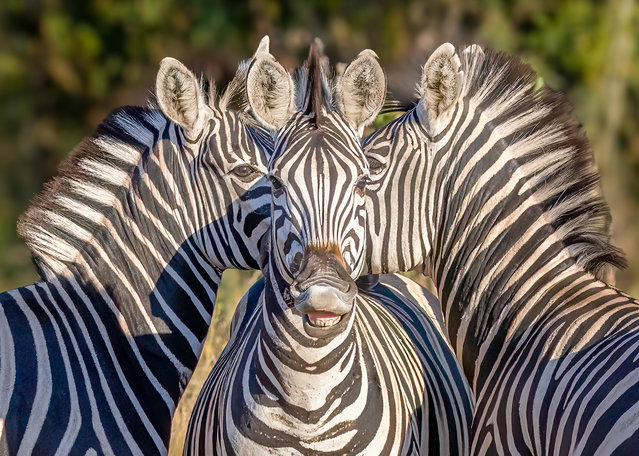
Three zebras maintain a 360-degree watch on their surroundings in South Africa’s Sabi Sands Game Reserve in mid-August 2025.(Photo by Mark Strom/Solent News & Photo Agency)
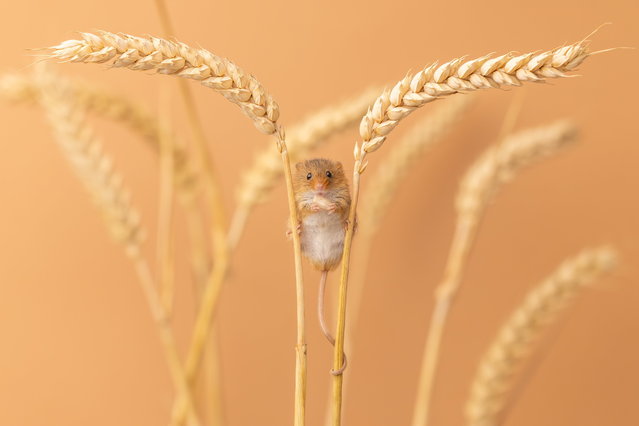
A harvest mouse uses wheat stems as stilts to eat a kernel in the UK in August 2025. Weighing as much as a coin and just two inches long, the mouse uses its prehensile tail for perfect balance.(Photo by Tony Nellis/South West News Service)
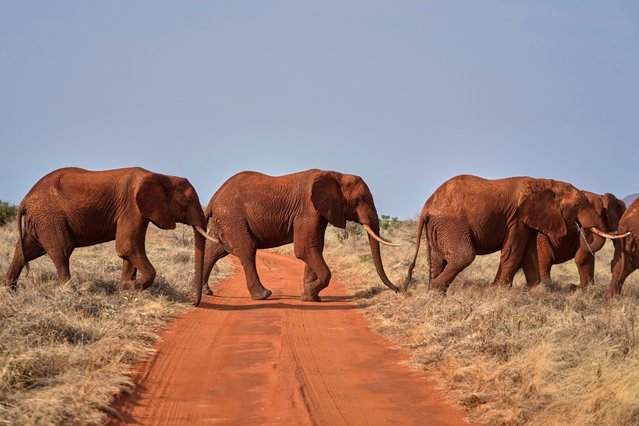
A herd of elephants crosses a road in Tsavo East National Park, Kenya, on August 7, 2025.(Photo by Brian Inganga/AP Photo)
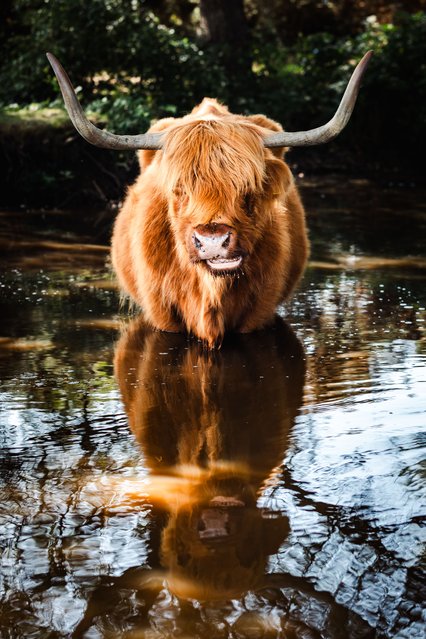
A Highland cow cools off in a pond in the New Forest, UK, in mid-August 2025. The breed often wades into water to regulate its body temperature during summer.(Photo by Will Evans/Bournemouth News)
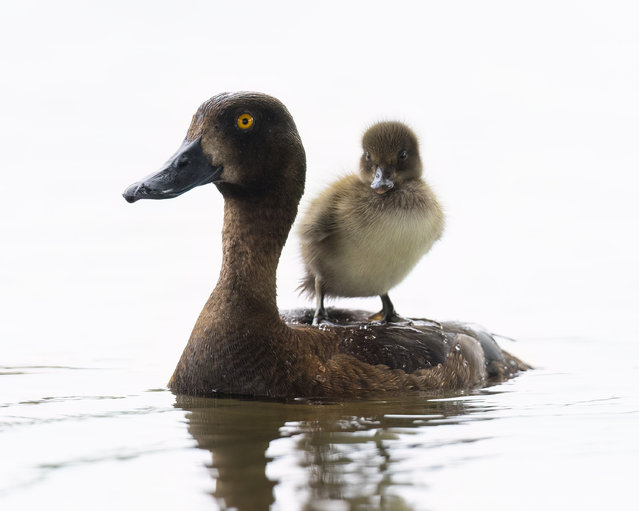
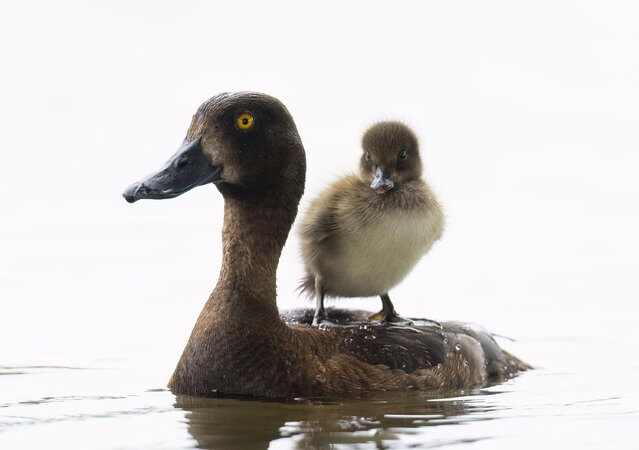
A mother duck gives her duckling a ride across a pond in London’s Bushy Park on August 13, 2025.(Phoot by Surrey Hills Photography/Bav Media)
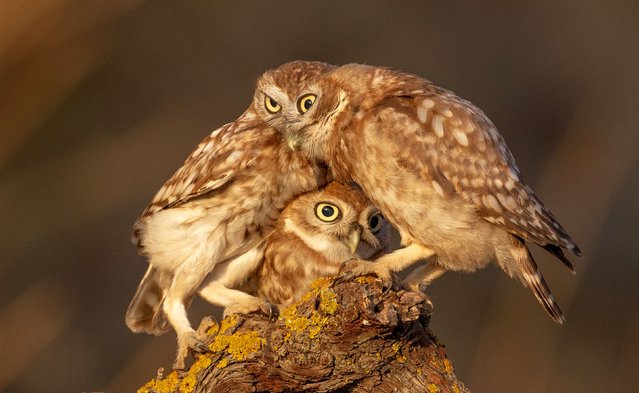
Little owl siblings play while their parents are away hunting in Israel’s Negev region in mid-August 2025.(Phoot by David Manusevich/Solent News & Photo Agency)