
- Advertisement -
Saturday, August 1, 2026
Fact

Photos of Insects

169views

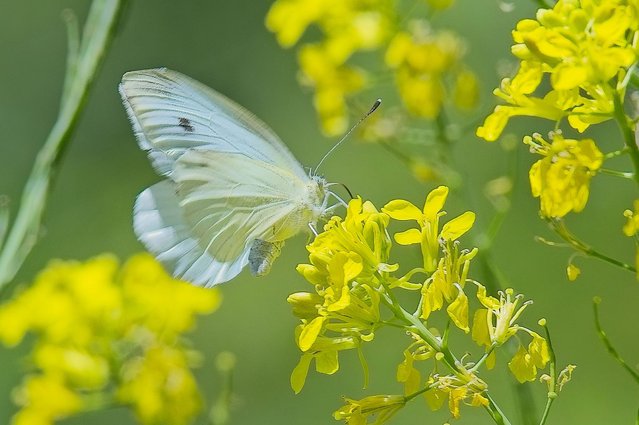
A white butterfly feeds on vibrant yellow wildflowers in Heyworth, Illinois, US on July 3, 2025. (Photo by Alan Look/Zuma Press Wire/Rex Features/Shutterstock)

A white butterfly feeds on vibrant yellow wildflowers in Heyworth, Illinois, on July 3, 2025.(Photo by Alan Look/Zuma Press Wire/Rex Features/Shutterstock)
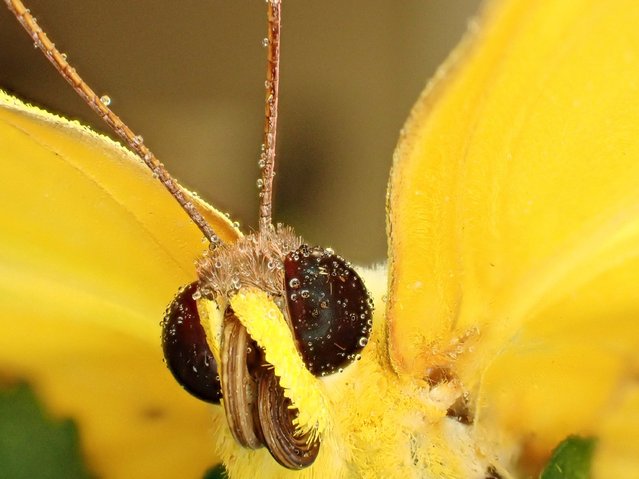
A closeup view of a butterfly's face is seen through macro lens in Tropical Butterfly Garden in Konya, Turkiye on July 09, 2025. (Photo by Serhat Cetinkaya/Anadolu via Getty Images)

A close-up macro shot of a butterfly’s face at the Tropical Butterfly Garden in Konya, Türkiye, on July 9, 2025. (Photo by Serhat Cetinkaya/Anadolu via Getty Images)
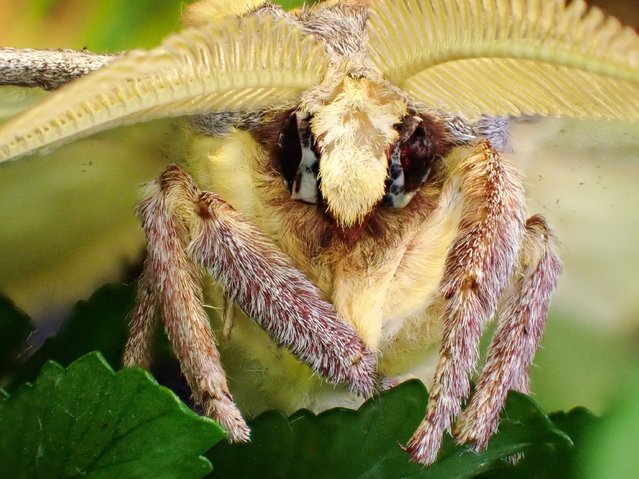
A closeup view of a butterfly's face is seen through macro lens in Tropical Butterfly Garden in Konya, Turkiye on July 09, 2025. (Photo by Serhat Cetinkaya/Anadolu via Getty Images)

A close-up macro photograph of a butterfly’s face at the Tropical Butterfly Garden in Konya, Türkiye, July 9, 2025.(Photo by Serhat Cetinkaya/Anadolu via Getty Images)
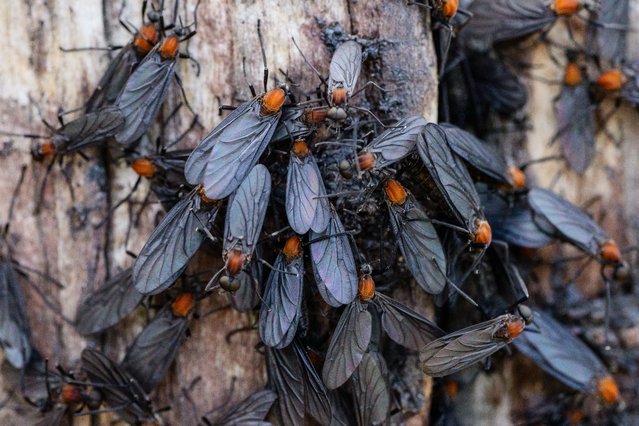
In this photo taken on July 3, 2025, lovebugs crawl over a wooden post on the peak of Gyeyangsan Mountain in Incheon, west of Seoul. K-pop's BTS are grossed out by them. A YouTuber ate them. Hikers plough through them: South Korea is dealing with a “lovebug” invasion that experts say highlights worsening climate change. (Photo by Anthony Wallace/AFP Photo)

Lovebugs swarm a wooden post atop Gyeyangsan Mountain in Incheon, west of Seoul, on July 3, 2025. The invasive insects have become a national nuisance – from disgusted K-pop stars to adventurous YouTubers eating them, while hikers battle through swarms. Experts warn this invasion highlights South Korea’s worsening climate crisis.(Photo by Anthony Wallace/AFP Photo)
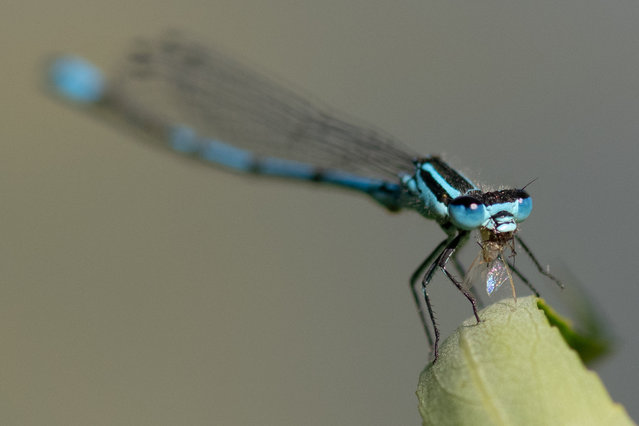
This photograph shows a wild Damselfly, a flying predatory insect, eating at the Bois de Vincennes park in eastern Paris, on June 17, 2025. (Photo by Martin Lelievre/AFP Photo)

A wild damselfly, a predatory flying insect, feeds in Bois de Vincennes park in eastern Paris, June 17, 2025.(Photo by Martin Lelievre/AFP Photo)
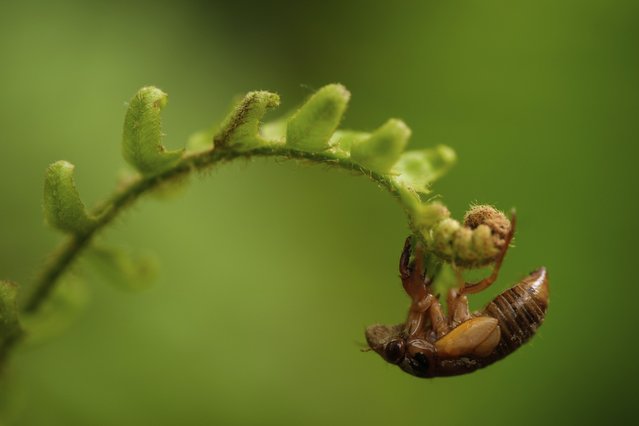
A periodical cicada nymph climbs to the end of a fern frond, Friday, May 16, 2025, in Cincinnati. (Photo by Carolyn Kaster/AP Photo)

A periodical cicada nymph climbs a fern frond in Cincinnati, May 16, 2025.(Photo by Carolyn Kaster/AP Photo)
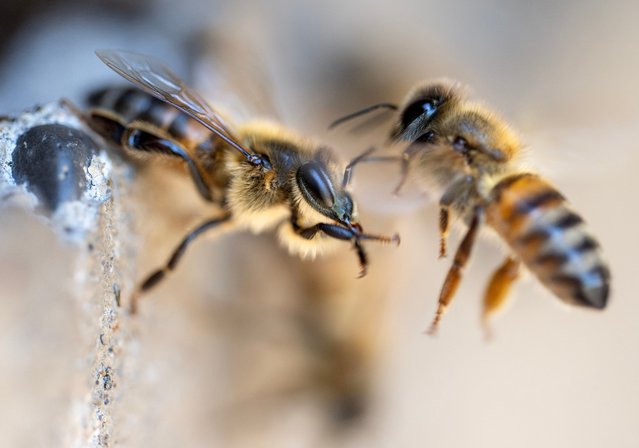
Feral honeybees interact at the edge of their hive behind a fruit processing barn near Elkton in rural south-western Oregon on May 28, 2025. (Photo by Robin Loznak/Zuma Press Wire/Rex Features/Shutterstock)

Feral honeybees gather at their hive entrance behind a fruit processing barn in Elkton, southwestern Oregon, May 28, 2025.(Photo by Robin Loznak/Zuma Press Wire/Rex Features/Shutterstock)
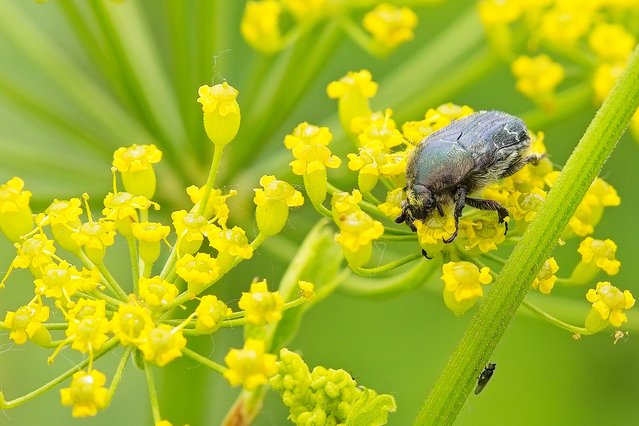
A beetle rests on wild parsnip flowers, its presence adding intrigue to the bright yellow blooms in Funks Grove, Illinois, US. (Photo by Alan Look/ZUMA Press Wire/Rex Features/Shutterstock)

A beetle perches on wild parsnip flowers, contrasting against the bright yellow blooms in Funks Grove, Illinois. (Photo by Alan Look/ZUMA Press Wire/Rex Features/Shutterstock)
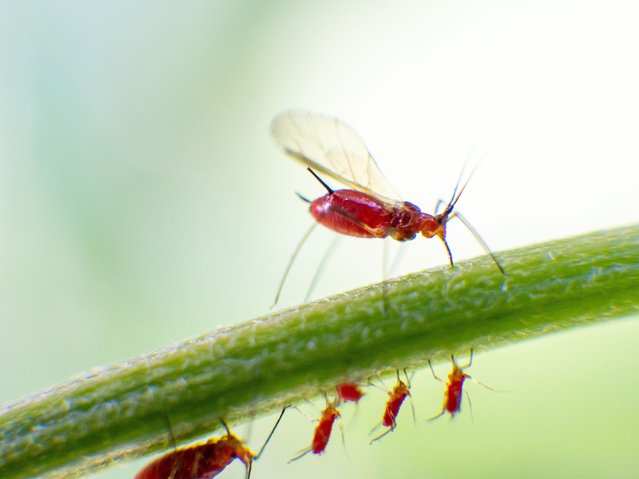
A winged red aphid sucks on a branch, with nymphs (babies) below, in New York, US on May 26, 2025. Gardeners will not be surprised to learn that female nymphs can be born pregnant, enabling the species to multiply rapidly. (Photo by Carlos Chiossone/Zuma Press Wire/Rex Features/Shutterstock)

A winged red aphid feeds on a plant stem in New York, May 26, 2025, surrounded by nymphs below. These prolific insects reproduce astonishingly fast – female nymphs can even be born already pregnant.(Photo by Carlos Chiossone/Zuma Press Wire/Rex Features/Shutterstock)
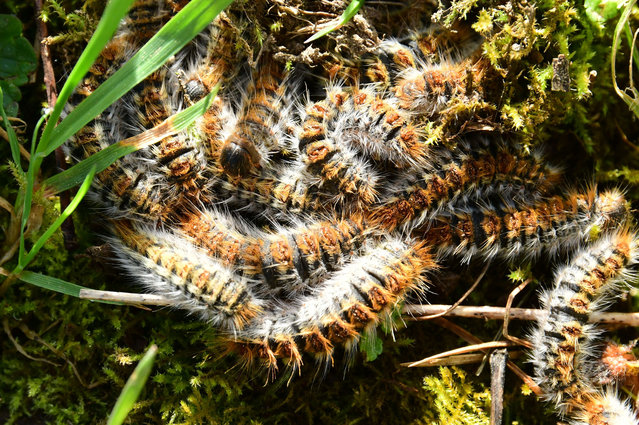
Processionary caterpillars form a group on the ground in an undergrowth in the village of Doizieux, France, on April 5, 2025. (Photo by Romain Doucelin/NurPhoto/Rex Features/Shutterstock)

Processionary caterpillars march in formation across the forest floor in Doizieux, France, April 5, 2025.(Photo by Romain Doucelin/NurPhoto/Rex Features/Shutterstock)
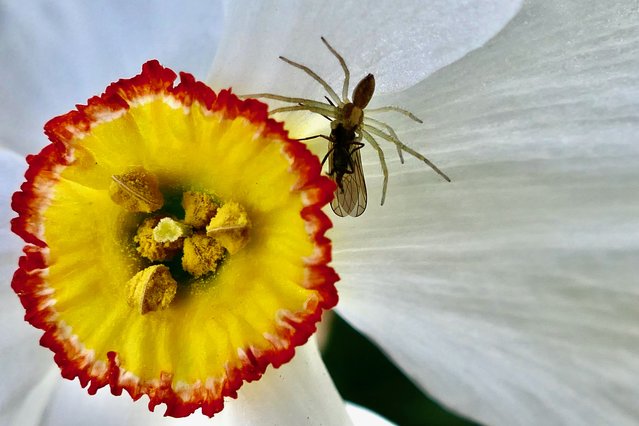
A spider consumes a fly on a Daffodil flower in the sunshine in Dunsden, Oxfordshire, UK on April 12, 2025. (Photo by Geoffrey Swaine/Rex Features/Shutterstock)

A spider dines on its fly prey atop a daffodil in sunlit Dunsden, Oxfordshire, April 12, 2025.(Photo by Geoffrey Swaine/Rex Features/Shutterstock)
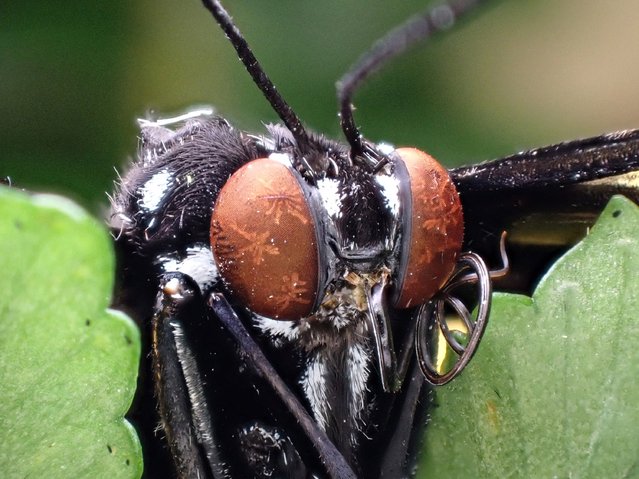
A closeup view of a butterfly's face is seen through macro lens in Tropical Butterfly Garden in Konya, Turkiye on July 09, 2025. (Photo by Serhat Cetinkaya/Anadolu via Getty Images)

A macro close-up of a butterfly’s face at the Tropical Butterfly Garden in Konya, Türkiye, July 9, 2025.(Photo by Serhat Cetinkaya/Anadolu via Getty Images)
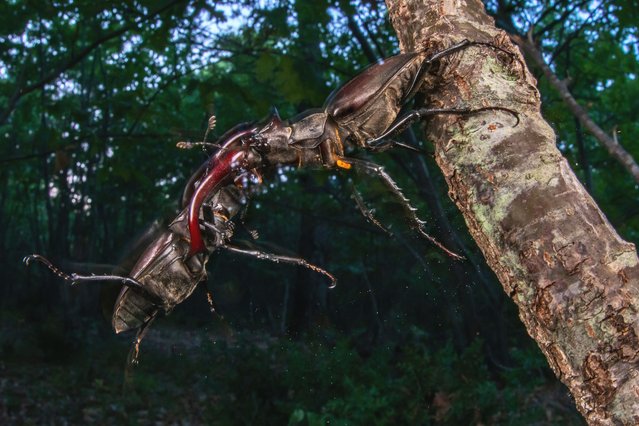
Combat between two male stag beetles, Italy, 2022. During the mating season, male stag beetles (Lucanus cervus) go into a frenzy, with lively but harmless clashes, in which bigger males often have the advantage over smaller ones due to their impressive mandibles. Longer larval development and genetic traits can increase the size of some individuals, but all saproxylic beetles are threatened by poor forest management, logging and dead wood removal to “clean” the forest. (Photo by Iacopo Nerozzi)

Two male stag beetles (Lucanus cervus) duel during mating season in Italy, 2022. These dramatic but harmless clashes favor larger males with stronger mandibles – a trait linked to extended larval development. Sadly, all saproxylic beetles face threats from excessive forest “cleaning” and dead wood removal.(Photo by Iacopo Nerozzi)
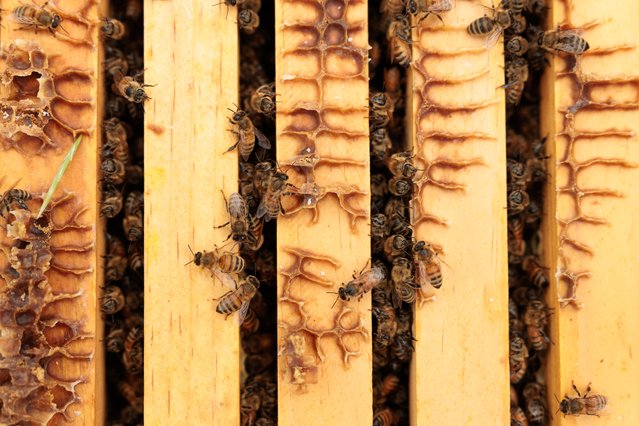
Boulder Valley Honey bees roam in their hive on June 11, 2025 in Boulder, Colorado. Pollinators contribute over $30 billion annually to U.S. agriculture, but rising threats like climate volatility, habitat loss, and Varroa mites have left many beekeepers struggling to maintain healthy colonies. (Photo by Andrew Wevers/Getty Images)

Honey bees tend to their hive in Boulder, Colorado, June 11, 2025. These vital pollinators support over $30 billion in U.S. crop value annually, yet face mounting threats from climate change, habitat destruction, and parasitic Varroa mites – challenges that strain both wild populations and managed apiaries.(Photo by Andrew Wevers/Getty Images)
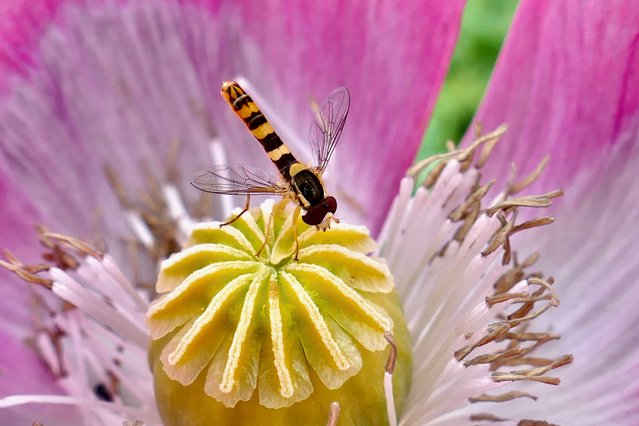
A hover-fly rests on the seed pod of a poppy flower in the humid afternoons weather in Dunsden, Oxfordshire, UK on June 25, 2025. (Photo by Geoffrey Swaine/Rex Features/Shutterstock)

A hoverfly perches on a poppy seed pod during a humid afternoon in Dunsden, Oxfordshire, June 25, 2025.(Photo by Geoffrey Swaine/Rex Features/Shutterstock)
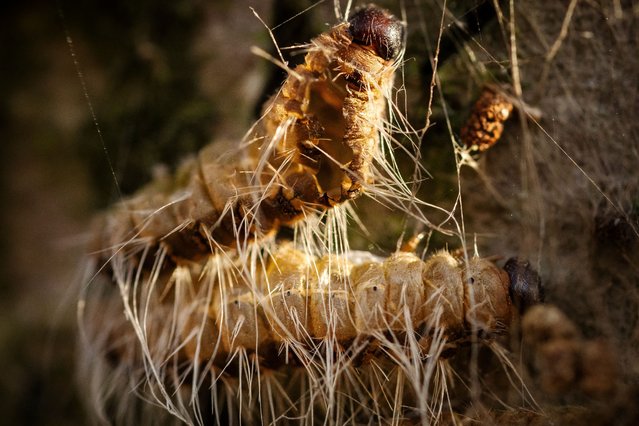
Caterpillars of the oak processionary moth (Thaumetopoea processionea) are pictured as they cluster together on the trunk of a tree on February 20, 2025, in Odense, Denmark, where 850 nests with these allergenic caterpillars are being removed by local exterminators. The oak processionary moth, Thaumetopoea processionea, is a nocturnal moth, with long, silver-gray toxic hair that can trigger allergic reactions, serious illness, and in the worst case, death. The toxic hair can be spread by the wind and the caterpillar might have been brought to Denmark via oak trees imported from Germany. (Photo by Mads Claus Rasmussen/Ritzau Scanpix via AFP Photo)

Oak processionary moth caterpillars (Thaumetopoea processionea) cluster on a tree in Odense, Denmark, February 20, 2025. Local crews are removing 850 nests of these invasive larvae, whose toxic hairs cause severe allergic reactions and can be fatal. The species likely arrived via imported German oak trees. (Photo by Mads Claus Rasmussen/Ritzau Scanpix via AFP Photo)
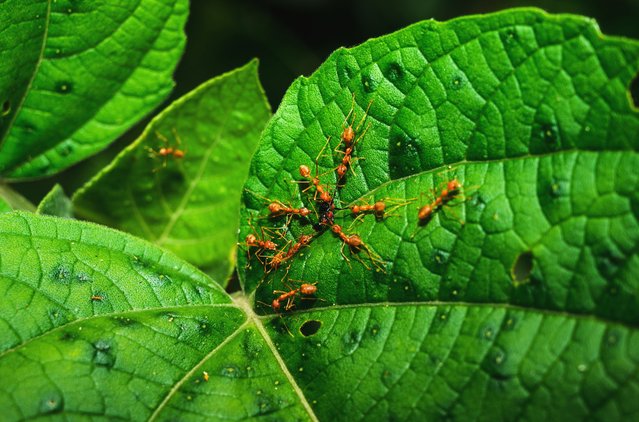
A group of weaver ants (Oecophylla smaragdina) attack a slender ant (Tetraponera sp.) in a forested area near Tehatta, West Bengal, on June 10, 2025. (Photo by Soumyabrata Roy/NurPhoto/Rex Features/Shutterstock)

Weaver ants (Oecophylla smaragdina) swarm and attack a slender ant (Tetraponera sp.) in a forest near Tehatta, West Bengal, June 10, 2025.(Photo by Soumyabrata Roy/NurPhoto/Rex Features/Shutterstock)
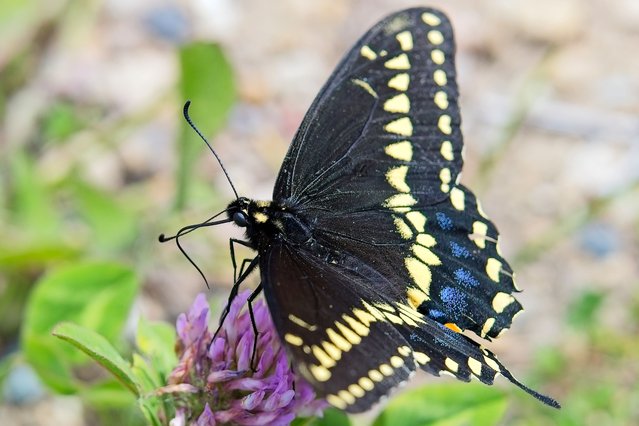
A majestic black swallowtail butterfly (Papilio polyxenes) dances gracefully on a cluster of vivid purple coneflowers, its iridescent wings shimmering under the golden sunlight in the small town of Waynesville, Illinois, US on May 26, 2025. (Photo by Alan Look/ZUMA Press Wire/Rex Features/Shutterstock)

A black swallowtail butterfly (Papilio polyxenes) alights on purple coneflowers in Waynesville, Illinois, May 26, 2025. Sunlight catches its iridescent wings, creating a fleeting spectacle of color.(Photo by Alan Look/ZUMA Press Wire/Rex Features/Shutterstock)
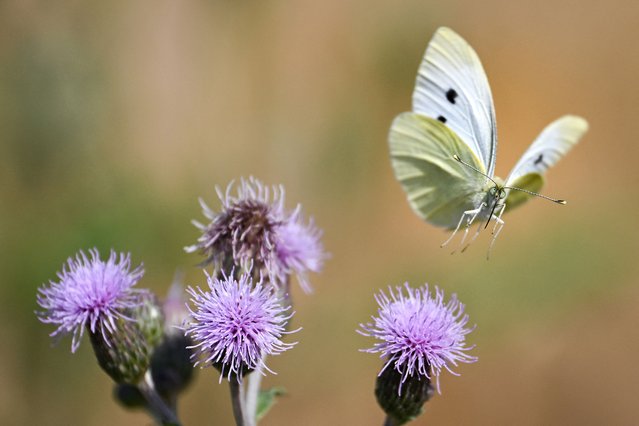
A Pieris rapae butterfly flies trough a field in Soultz-Haut-Rhin, eastern France, on June 18, 2025. (Photo by Sebastien Bozon/AFP Photo)

A small white butterfly (Pieris rapae) flutters through a field in Soultz-Haut-Rhin, eastern France, June 18, 2025.(Photo by Sebastien Bozon/AFP Photo)
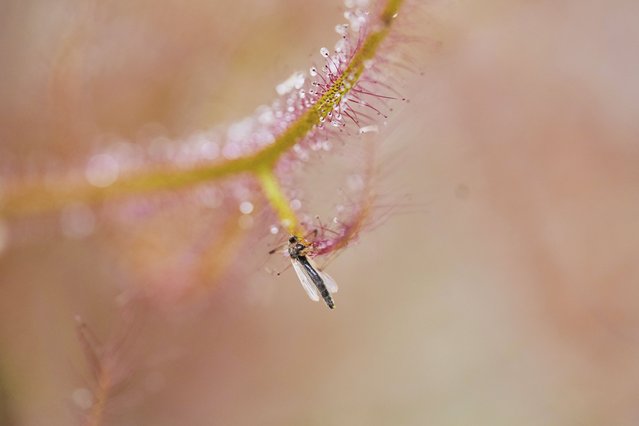
A Drosera binata on display at a carnivorous plant exhibit traps an insect at the Botanical Garden in Bogota, Colombia, Thursday, April 3, 2025. (Photo by Fernando Vergara/AP Photo)

A forked sundew (Drosera binata) captures an insect at Bogotá’s Botanical Garden, April 3, 2025. The carnivorous plant was part of a special exhibition showcasing nature’s predatory flora.(Photo by Fernando Vergara/AP Photo)

Julia Everson
Julia is a freelance writer and lifelong learner with an ongoing curiosity to study new things. She enjoys checking out the latest grammar books and writing about video games more than anything else. If she's not running through Colorado’s breathtaking landscape, she's indoors hidden away in her cozy game room trolling noobs and leveling up an RPG character. She is a Final Fantasy IX apologist (although she loves them all… except XV), coffee aficionado, and a bit of a health nut. Julia graduated from Western Kentucky University with a B.A. in English Literature with a minor in Creative Writing.