
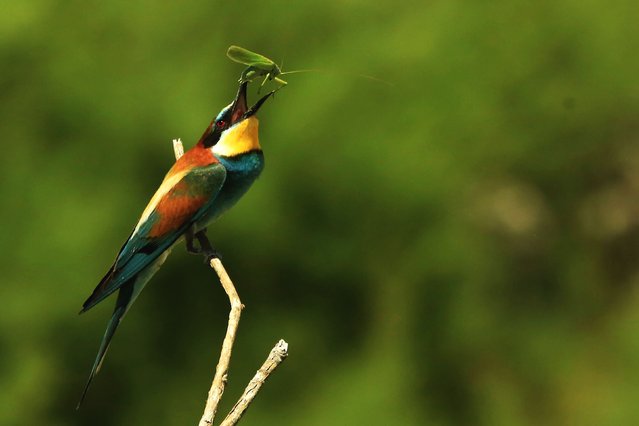
A European Bee-eater (Merops apiaster) perches on a tree branch while eating a grasshopper in Ereğli district, Konya, Türkiye, on June 28, 2025. These colorful birds thrive near wetlands, where they hunt insects—primarily bees—with remarkable agility.(Photo by Yavuz Gorur/Anadolu via Getty Images)
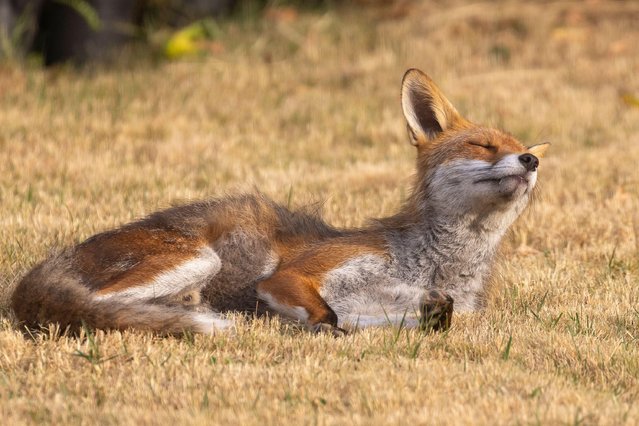
An adult fox basks in the early morning sun in a Worcestershire garden, UK, on July 4, 2025. (Photo by Lee Hudson/Alamy Live News)
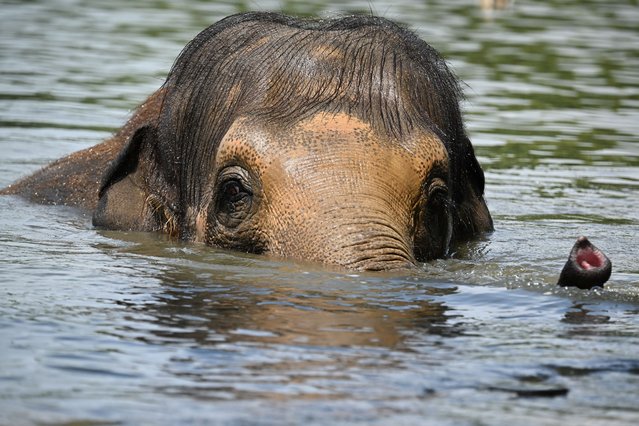
An elephant cools off in a pond at Pairi Daiza zoo in Brugelette, Belgium, on July 2, 2025, as a scorching heatwave sweeps across Europe. The extreme temperatures, which have plagued southern Europe for days, are now moving northward—prompting school closures in France and the Netherlands and triggering public health alerts. (Photo by Nicolas Tucat/AFP Photo)
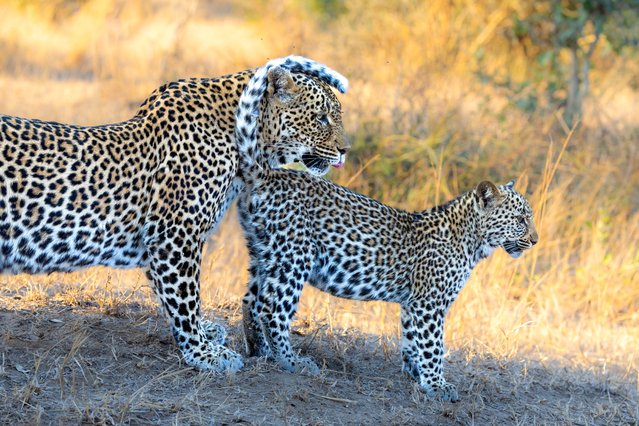
A leopard cub and its mother take shelter in the shade at Mala Mala Private Game Reserve, South Africa, early July 2025.(Photo by Ann & Steve Toon/Solent News & Photo Agency)
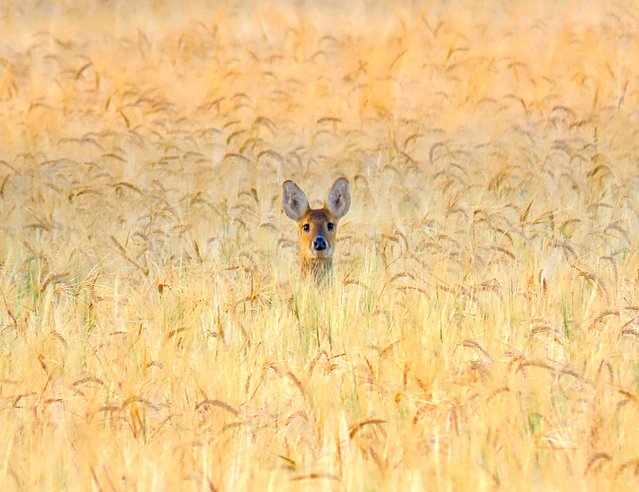
A Chinese water deer peers through barley fields in Grimston, Norfolk, UK, in this standalone photo from July 1, 2025. Originally introduced to London Zoo in 1873, the species gained a foothold in the wild after escaping Whipsnade Zoo in 1929. Through subsequent escapes and intentional releases, their numbers have grown significantly—today, Britain’s population represents 10% of the global total, primarily concentrated in Bedfordshire, Cambridgeshire, and Norfolk. (Photo by Julie Smart/Bav Media)
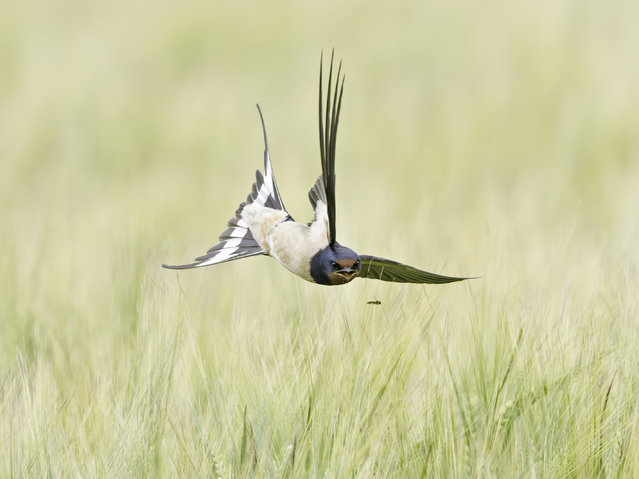
A swallow swoops down to catch a fly in Fowlmere, Cambridgeshire, UK, in early July 2025. These agile birds flap their wings up to nine times per second, with flies comprising around 70% of their diet.(Photo by Martin Abbess/Animal News Agency)
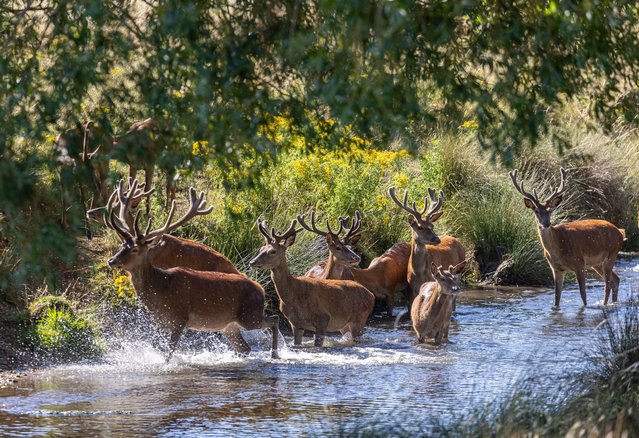
Stags seek respite from the summer heat as they cool off in Richmond Park, southwest London, on July 1, 2025. (Photo by Alex Lentati/London News Pictures)
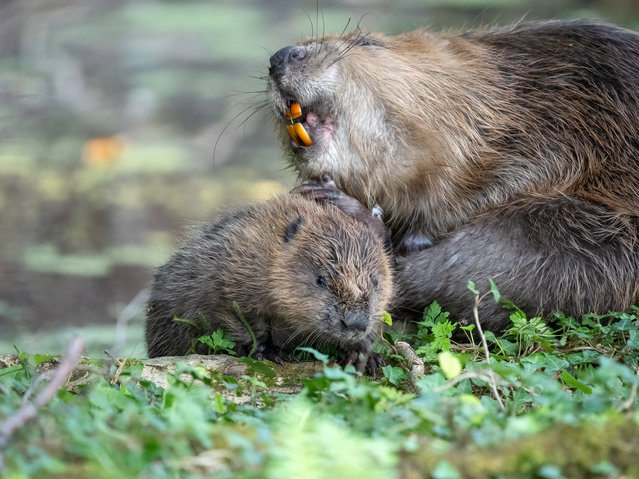
Undated handout photo from The National Trust shows a female beaver and her kit on the Holnicote Estate in Exmoor, Somerset. The image highlights the Trust’s ‘Riverlands’ project, launched in 2020 to reintroduce beavers into two enclosures and restore the River Aller to its natural ‘stage zero’ state—featuring a dynamic network of channels, pools, and shallow riffles as it existed before human intervention. Conservationists emphasize that such restoration efforts, including beaver reintroduction, enhance landscape resilience against growing drought risks. Issued: July 5, 2025. (Photo by Barry Edwards/The National Trust/PA Wire)
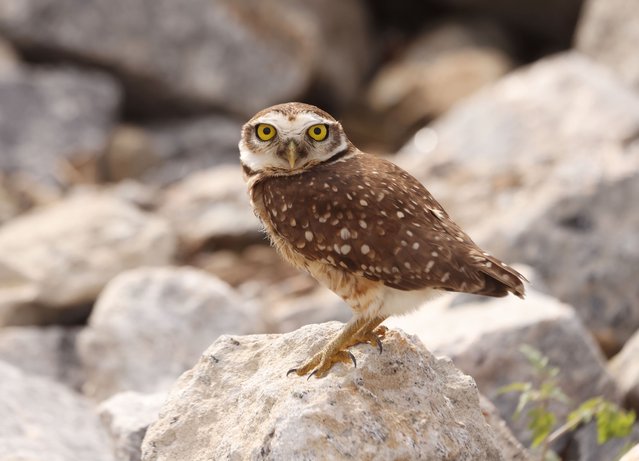
A Burrowing Owl stands alert near the sands of Ipanema Beach, Rio de Janeiro, on July 3, 2025—an unusual but occasional sight along the city’s coastline. Recognizable by their bright yellow eyes, long legs, and ground-dwelling behavior, these small owls typically nest in abandoned burrows, favoring open grasslands over urban settings. Their appearance on this bustling beach underscores wildlife’s remarkable adaptability to human-dominated landscapes. (Photo by Bob Karp/ZUMA Press Wire/Rex Features/Shutterstock)
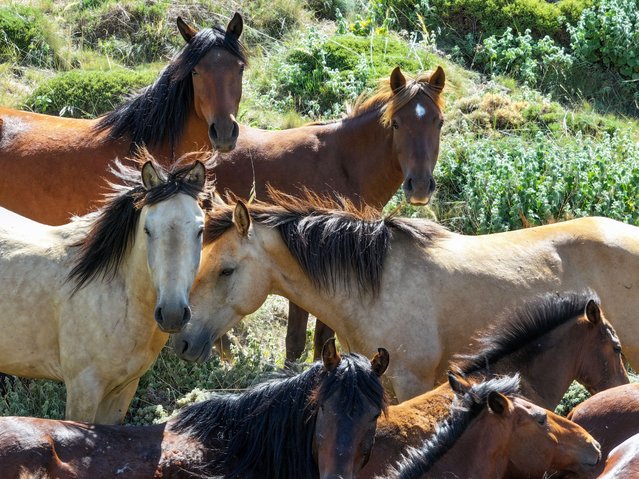
Wild Yılkı horses graze near the grass-covered crater of Mount Karadağ in southern Turkey on June 19, 2025. (Photo by Serhat Cetinkaya/Anadolu via Getty Images)
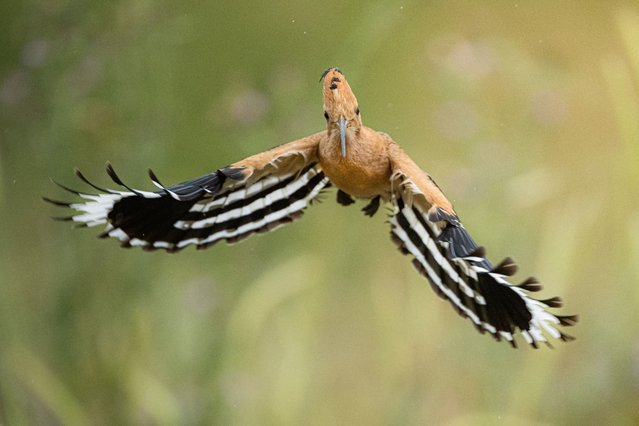
A Eurasian hoopoe – one of the migratory bird species that arrives in Türkiye each spring – is seen flapping its wings in Bursa, Türkiye, on May 26, 2025. These distinctive birds, recognizable by their orange-brown bodies and striking black-and-white striped wings, can be observed throughout summer in forest clearings and rural landscapes. (Photo by Alper Tuydes/Anadolu via Getty Images)
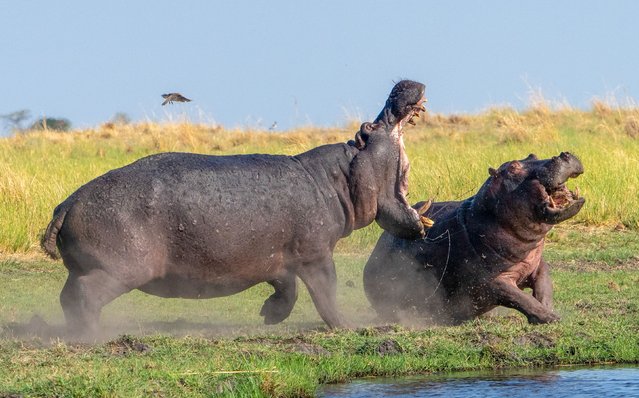
Two hippos engage in a fierce sparring match at the water’s edge in Botswana’s Chobe National Park during early July 2025. The territorial battle saw the massive mammals attempting to bite each other before one ultimately retreated into the safety of the river.(Photo by Annette Marino/Solent News & Photo Agency)
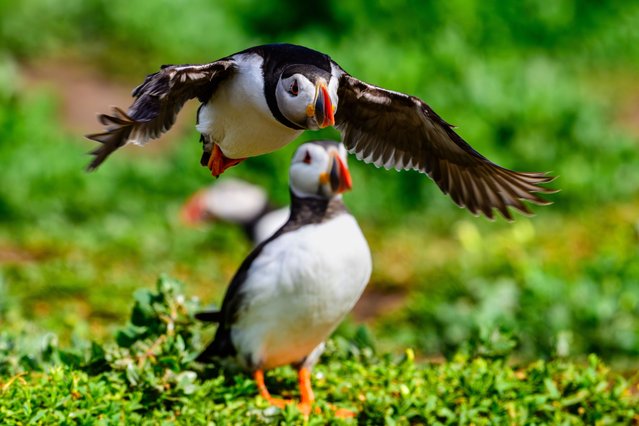
An Atlantic Puffin (Fratercula arctica) soars past another on the Farne Islands, Northumberland, UK, June 24, 2025.(Photo by Jane Hobson/Rex Features/Shutterstock)
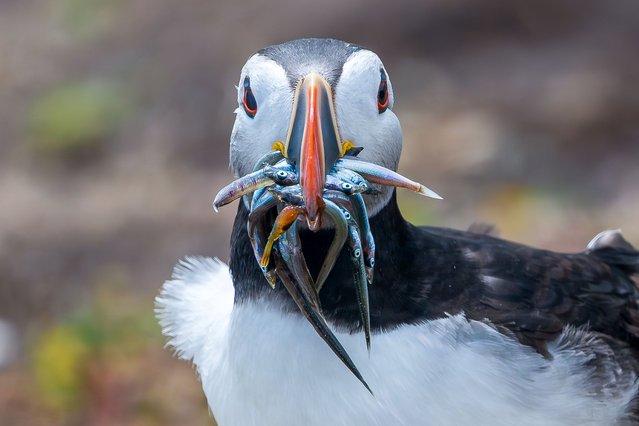
An Atlantic puffin stands alert on the rocky cliffs of the Farne Islands, Northumberland, UK, on June 30, 2025. These charismatic seabirds return to these protected islands each summer to breed. (Photo by John Fatkin/Cover Images)
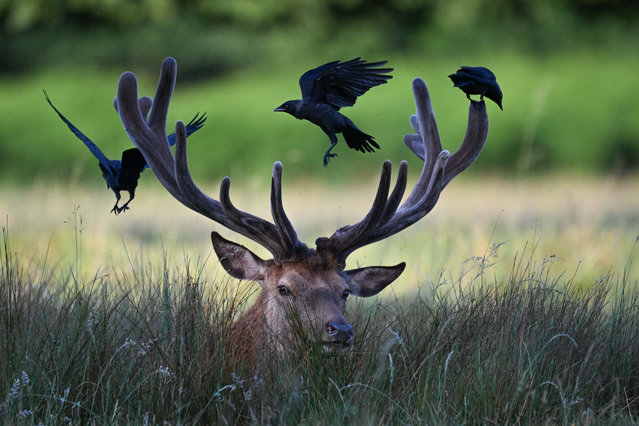
Birds perch on a deer’s antlers in Bushy Park, London, on June 13, 2025. This rare and serene moment between species captures the harmony of wildlife in the soft morning light. (Photo by Rasid Necati Aslim/Anadolu via Getty Images)
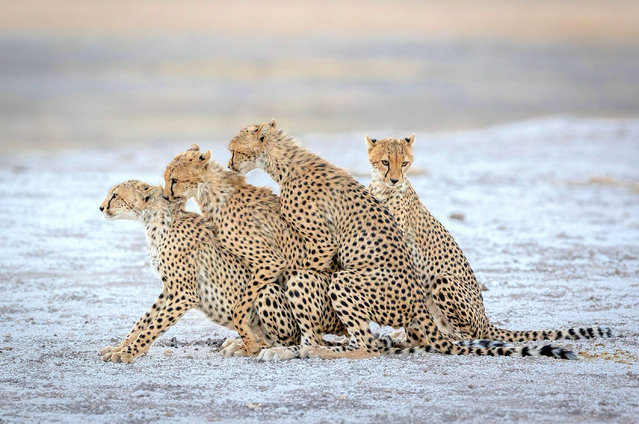
A rare behavioral moment: Cheetah siblings engage in dominance displays to establish hierarchy within their group, captured in Kenya’s Amboseli National Park, July 2025. Unlike solitary big cats, cheetahs maintain complex social bonds throughout their lives. Photographer Charlotte Keast documented this intimate interaction after five hours of patient observation.(Photo by Charlotte Keast/Two Point O Media/Cover Images)
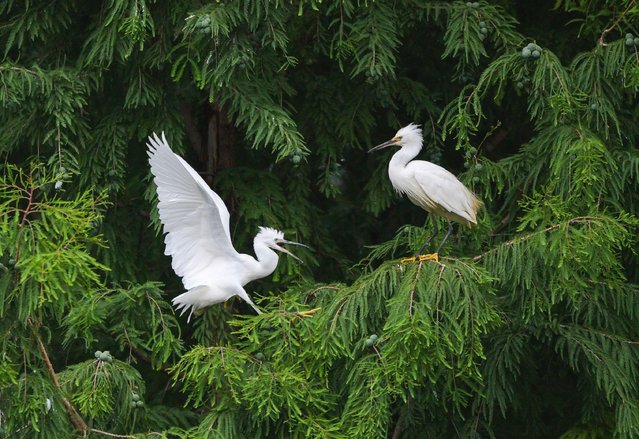
Egrets perch in Dianchi Haihong Wetland Park in Kunming, southwest China’s Yunnan Province, on July 7, 2025. The park’s thriving fish and shrimp populations draw flocks of egrets, herons, and other birds during the summer months. (Photo by Xinhua News Agency/Rex Features/Shutterstock)
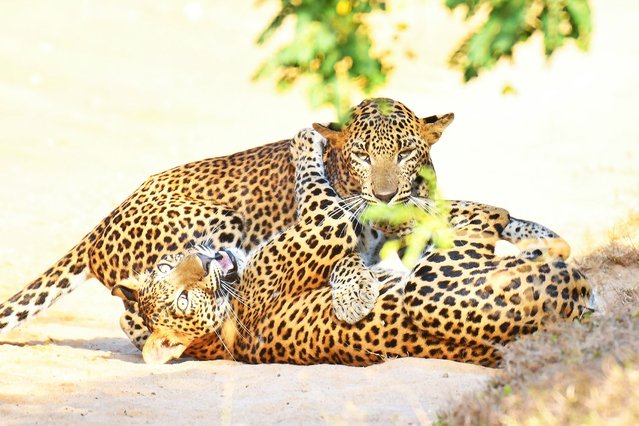
Two Sri Lankan leopards (Panthera pardus kotiya) engage in playful interaction in Yala National Park, Sri Lanka, on July 3, 2025. As the country’s most visited and second-largest national park, Yala lies approximately 274 kilometers (170 miles) southeast of Colombo.(Photo by Krishan Kariyawasam/NurPhoto/Rex Features/Shutterstock)
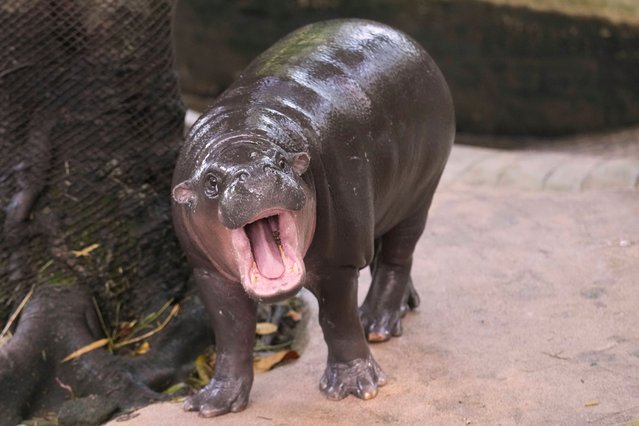
Hippo Moo Deng yawns at Khao Kheow Open Zoo in Thailand’s Chonburi Province on July 10, 2025, celebrating its first birthday.(Phopto by Sakchai Lalit/AP Photo)
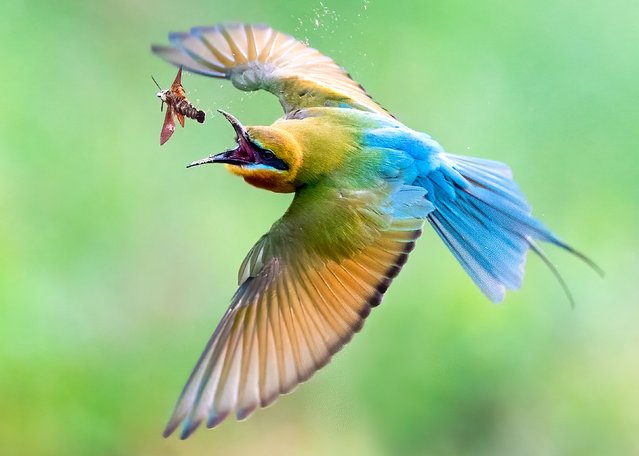
A blue-tailed bee-eater (Merops philippinus) pursues its prey in a dazzling aerial chase along the Kaveri River near Mysore, India, late June 2025. These agile hunters are known for their spectacular mid-air maneuvers to catch insects.(Photo by Nitin Jain/Solent News)